They stand there, unassuming and often overlooked, pressed into doorframes across office buildings, hospitals, and shopping centers. At first glance, fire-rated and safety doors seem like ordinary barriers, perhaps a bit heavier, a touch more industrial.
But look closer, and you’ll discover something remarkable: these doors are engineered sentinels, quietly working to protect lives and property with a sophistication that rivals any cutting-edge technology.
Fire-rated and safety doors play a critical role in commercial buildings, balancing protection, compliance, and aesthetics. Beyond meeting legal requirements, these doors influence how safe, functional, and visually cohesive a space feels.
This article explains what fire-rated and safety doors are, how they work, and why they matter for modern commercial environments. Think of them as the unsung heroes of building design, smart, resilient, and surprisingly adaptable.
Understanding Fire-Rated Doors
Fire-rated doors are specifically designed to slow the spread of fire and smoke, allowing occupants more time to evacuate and helping emergency teams respond effectively. Unlike standard doors, these specialized barriers undergo rigorous testing to ensure they can withstand extreme heat and flames for predetermined periods.
What Makes a Door Fire-Rated
The magic happens in the details. Fire-rated doors aren’t just thicker versions of regular doors, they’re precision-engineered systems that respond intelligently to danger.
Tested fire resistance: Doors receive ratings based on how long they can contain fire, typically for 30, 60, 90, or 120 minutes. During certification testing, these doors face furnace temperatures exceeding 1,700 degrees Fahrenheit while sensors monitor their structural integrity.
Certified materials: Manufacturers use steel, solid timber cores, or advanced composite constructions that resist warping and maintain their protective barrier even as temperatures soar. These materials work together like layers of armor, each contributing to the door’s defensive capabilities.
Sealing systems: Perhaps the most fascinating component is the intumescent seal, a reactive material that expands when exposed to heat, effectively plugging gaps to block smoke and flames. It’s almost organic in how it responds, swelling up to 10 times its original size to create an impenetrable gasket.
These elements combine to create a door that thinks, in its own way, reacting to environmental threats with built-in intelligence.
Why They Are Mandatory in Commercial Buildings
Building codes don’t mandate fire-rated doors on a whim. Every requirement stems from decades of fire safety research and real-world lessons learned from tragic incidents.
Compliance with building codes and fire safety regulations: Authorities require fire-rated doors in specific locations based on occupancy load, building height, and use type. Failing to comply can result in hefty fines, insurance complications, and most importantly, unnecessary risk to human life.
Protection of escape routes: Stairwells, corridors, and exit pathways rely on fire-rated doors to remain passable during emergencies. These doors create safe zones that compartmentalize buildings, preventing fire from blocking evacuation routes.
Reduction of property damage: By containing fire to specific areas, these doors limit destruction and can mean the difference between minor damage and total loss.
When integrated thoughtfully, fire-rated solutions support both safety goals and interior design planning without compromising style. The selection of commercial door hardware plays an essential role in ensuring these protective systems function exactly as intended.
Safety Doors Beyond Fire Protection
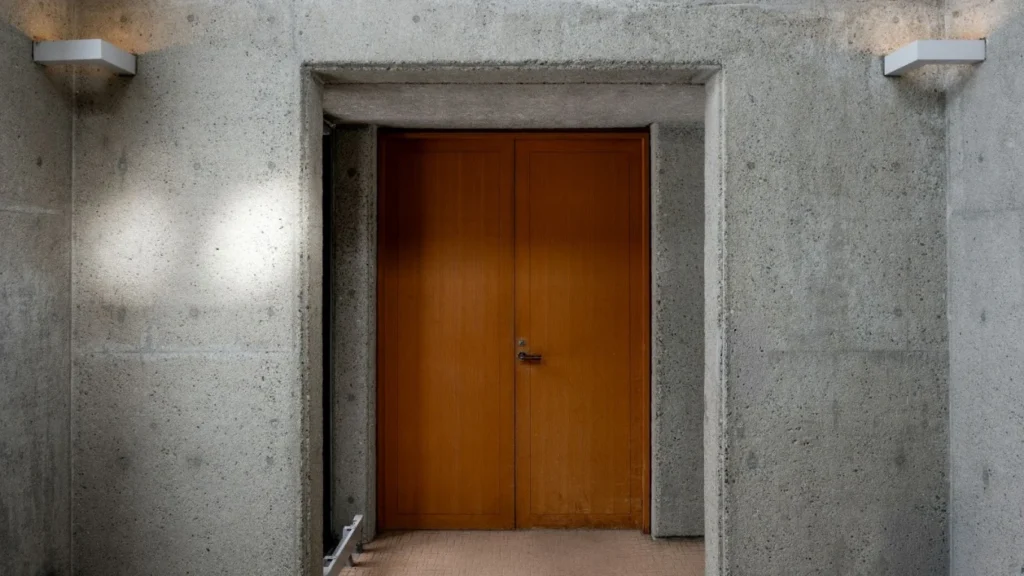
Not all safety doors are fire-rated, but they are equally essential for managing risk in high-traffic commercial spaces. These doors address different threats, from unauthorized access to accidental injury, creating layers of protection throughout a building.
Common Types of Safety Doors
The world of safety doors extends far beyond fire resistance, with each type engineered to solve specific challenges.
Emergency exit doors: Designed for quick, unobstructed evacuation, these doors must open effortlessly in the direction of egress, even under panic conditions. They often feature crash bars that require minimal force to operate, vital when crowds push toward exits during emergencies.
Security doors: Reinforced for theft and intrusion prevention, security doors incorporate steel frames, multi-point locking systems, and sometimes ballistic-rated materials. They’re the gatekeepers of sensitive areas, from pharmaceutical storage rooms to data centers.
Impact-resistant doors: Used in hospitals, schools, and industrial facilities, these doors withstand repeated collisions from gurneys, carts, and the daily chaos of busy corridors. Their surfaces resist dents, scratches, and the wear that would destroy ordinary doors within months.
Key Functional Features
What makes safety doors truly effective are the thoughtful features that anticipate human behavior under stress.
Panic bars or push hardware: These devices allow doors to be opened with a simple push, requiring no twisting or pulling, crucial when fine motor skills fail under stress.
Non-slip thresholds and clear signage: Transitions between floor surfaces can trip evacuating people. Safety doors address this with carefully designed thresholds and illuminated or photoluminescent exit signs that remain visible even when power fails.
Durable finishes for frequent use: High-traffic areas demand surfaces that resist scratching, staining, and bacterial growth. Modern safety doors feature antimicrobial coatings and impact-resistant laminates that maintain their appearance despite constant use.
These features ensure smooth daily operations while supporting user safety, a balance that separates mediocre buildings from exceptional ones.

Integrating Safety Doors into Interior Design
Modern commercial spaces demand doors that perform well and look intentional within the overall design scheme. Gone are the days when safety meant sacrificing aesthetics. Today’s designers have learned to embrace the challenge, turning regulatory requirements into design opportunities.
Design Considerations
The best commercial spaces feel cohesive because every element, including safety components, contributes to the overall vision.
Finishes that match walls, floors, or branding elements: Fire-rated doors now come in wood veneers, custom paint colors, and even textured finishes that complement surrounding materials. A door can blend seamlessly into a wall or make a deliberate architectural statement, the choice depends on design intent.
Glass-rated fire doors for transparency and light flow: Wired glass has evolved into clear ceramic glass systems that offer fire protection without the prison-like appearance. These doors maintain visual connections between spaces, supporting open-plan concepts while still compartmentalizing fire risk.
Slim profiles and concealed hardware: Modern engineering allows for slimmer door frames and hardware that tucks away from view. The result looks less institutional and more refined, suitable for upscale hotels, corporate headquarters, and retail environments.
Thoughtful selection allows interior design strategies to align safety requirements with architectural vision, proving that protection and beauty aren’t mutually exclusive.
Choosing the Right Door for Your Commercial Space
Selecting appropriate fire-rated and safety doors depends on function, location, and regulatory needs. It’s a decision that requires balancing multiple factors, and getting it wrong can compromise safety, budget, and design goals.
Factors to Evaluate
Smart door selection starts with asking the right questions.
Building occupancy type and foot traffic: A door in a quiet administrative corridor has vastly different requirements than one in a hospital emergency department. High-traffic areas demand robust hardware and impact-resistant surfaces, while lower-use spaces might prioritize sound insulation or aesthetic refinement.
Local fire and building codes: Regulations vary significantly by jurisdiction and building classification. What’s acceptable in one city might violate codes in another. Recent updates to the International Building Code have introduced stricter requirements for some applications, making expert guidance essential.
Maintenance requirements and long-term durability: The cheapest door isn’t always the most economical choice. Quality commercial door hardware and durable construction reduce replacement costs and minimize disruptions from repairs. Consider lifecycle costs, not just initial investment.
Working with qualified designers and suppliers helps ensure the right balance between compliance, usability, and aesthetics. These professionals stay current with code changes, understand product innovations, and can navigate the complex specifications that govern commercial door selection.
Conclusion
Fire-rated and safety doors are not just technical necessities; they are essential components of safe, well-designed commercial environments.
By understanding their purpose, features, and design potential, businesses can create spaces that protect people while maintaining a professional and cohesive look. The right door choices ultimately contribute to safer buildings and smarter design decisions.
These remarkable barriers possess an intelligence that operates without consciousness, responding to heat, controlling access, guiding evacuation, and enduring punishment that would destroy lesser systems.
They remind us that sophistication doesn’t always announce itself loudly. Sometimes, the smartest solutions are the ones we barely notice, working silently in the background until the moment they’re needed most. In the realm of building safety, that quiet competence might be the most profound form of intelligence we could ask for.