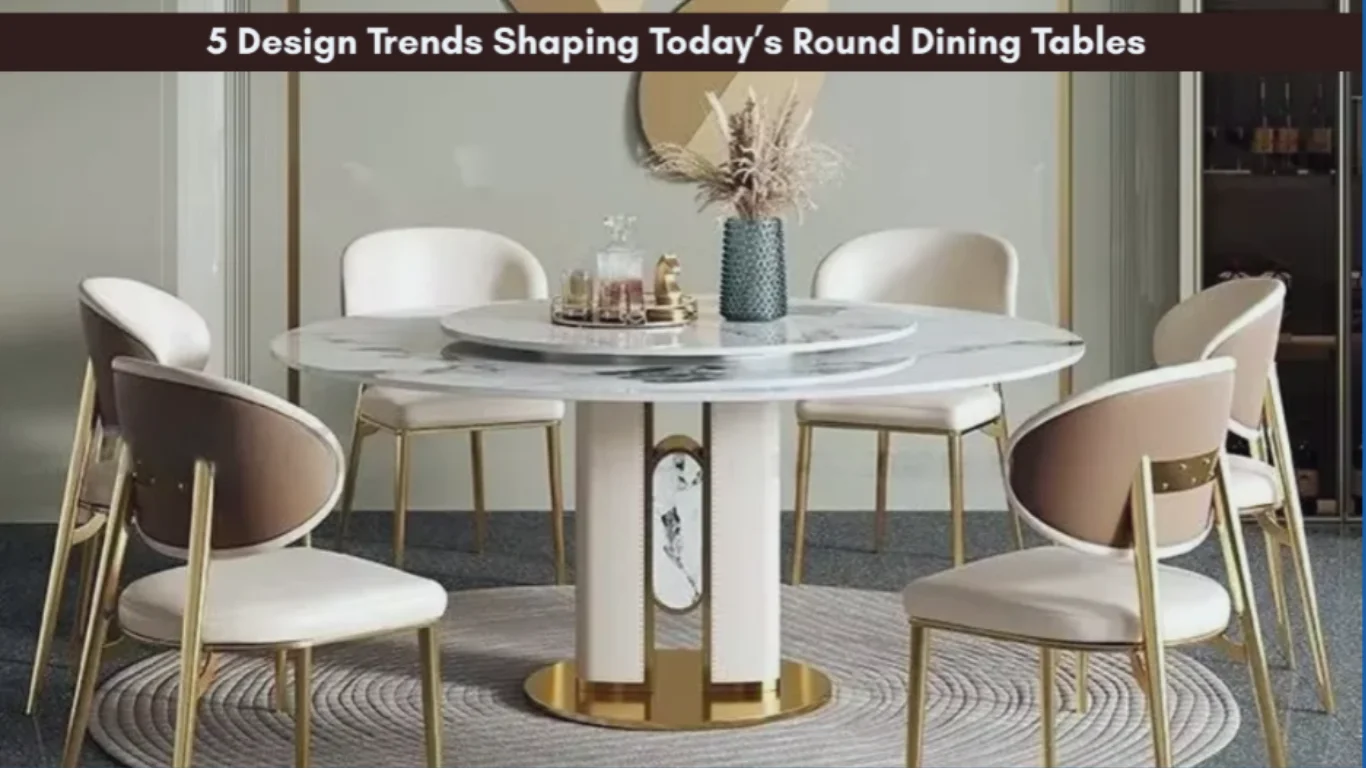
Excitement is usually followed by doubt when you make a decision to buy a round dining table. You might wonder, “Will the shape fit into your design? Will it be too small, or will it provide enough serving area when you have a gathering?
Simultaneously, you may be concerned with the aesthetic versatility of visual appeal combined with practical use, particularly when your kitchen is used in a multi-purpose setting. However, emerging design trends are dealing with these very issues in considerate ways.
With built-in serving storage capabilities, polished materials, and balanced ratios, modern round dining tables are meant to combine convenience and aesthetics. By understanding these trends, you can make an informed decision and choose a table that supports your lifestyle, as well as your interior design.
This article discusses the five design trends influencing the current round dining tables.
1. Marble Surfaces as Visual Anchor
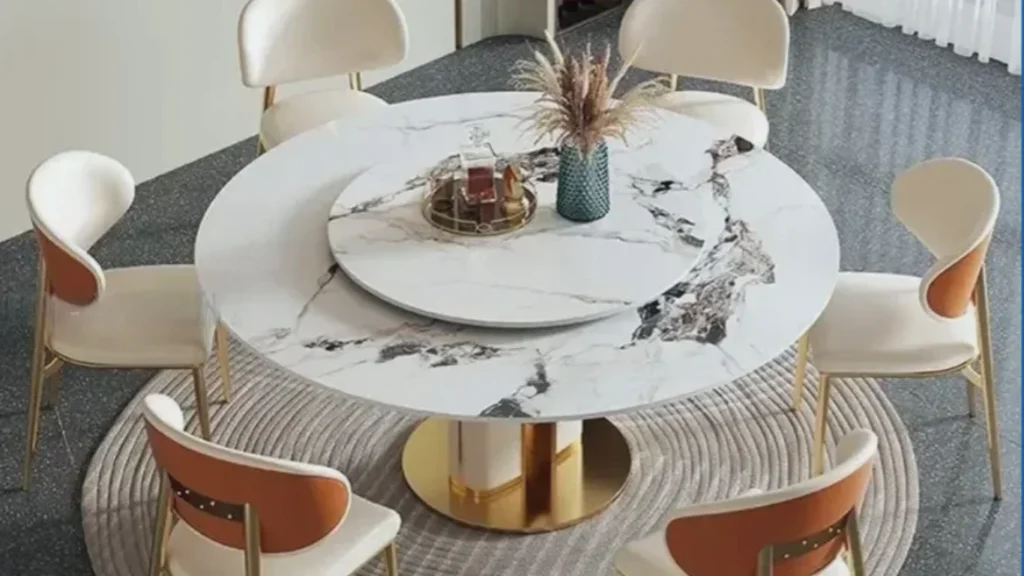
Material choice has become a core factor of round table design. The visual weight and balance are instantly created with a well-designed round dining table with a marble top.
The natural patterns in marble design provide movement, ensuring that the circular surface does not appear flat or plain. In addition, marble provides a slight contrast to the rest of the decor without being too overpowering.
Furthermore, marble works well in daily environments when it is properly sealed. It can withstand heat and frequent wear, which means it can be used in everyday meals as well as at parties.
Since the surface becomes the focus area, designers tend to maintain the base simple and structured. Thus, the general appearance seems polished and grounded. The trend shows that round tables are not just dependent on shape to make an impression. Rather, their presence is now determined by the quality of their materials.
2. Built-In Lazy Susan for Seamless Serving
Besides the material enhancements, functionality has been enhanced with the incorporation of Lazy Susan elements. Instead of attaching a separate rotating tray, designers are developing it into the tabletop. Due to this, the surface looks cohesive and clutter-free.
This feature addresses one of the primary issues with circular tables: accessibility. When eating together, food in the middle of the table may seem too distant to reach. But with a smooth rotating mechanism, accessibility seems easier across all the seats. This means that serving is less disruptive and more efficient.
Moreover, the integration maintains proportions balanced. The disc at the center does not break the circular geometry but is consistent with it. This fact increases the usability and symmetry. Thus, this trend is a combination of functionality and balanced design.
3. Pedestal Bases Supporting Balanced Structure
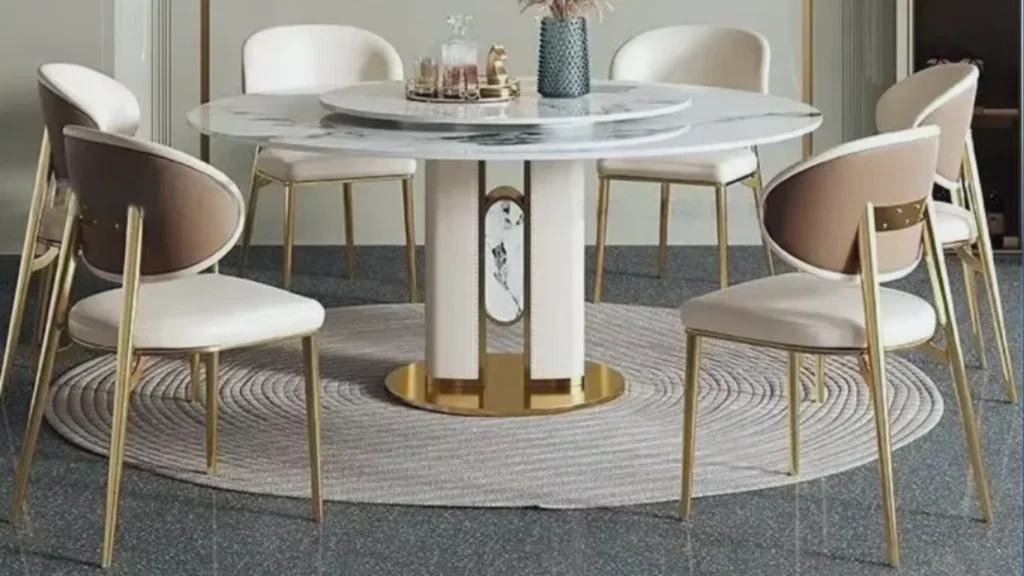
In modern round tables, base construction has become an icon in designs. The four-legged traditional designs are slowly being substituted with pedestal or column-shaped bases. This architectural modification not only increases stability but also creates a better visual harmony.
Chairs are more flexible in their arrangement with a central base. The corner legs do not limit placement. Therefore, it becomes easy to adjust seats, especially in dynamic households. Also, the single support enhances the circular shape, with the weight being concentrated.
Design-wise, pedestal bases are aesthetically pleasing. They allow the tabletop to appear as if it is floating above a strong central base. Thus, the form and the functioning are improved at the same time. Therefore, it is an example of thoughtful engineering, not mere superficial styling.
4. Refined Finishes Promoting Longevity
Other than shape and structure, the surface finishes have become an important feature. Designers are focusing more on finishes that are resistant to stains, scratches, and heat. As a result, round tables do not lose their appearance despite frequent use.
Clean marble, polished stone, and treated structural elements enhance the lifespan. Additionally, smooth finishing increases light reflection and thus the table does not appear visually heavy. This comes in handy, especially in small dining spaces where the darker or matte finishes would visually shrink the room.
Importantly, refined finishes also reduce maintenance stress. You can host gatherings without constant worry about damage or visible wear. In addition, consistent surface treatment across the tabletop and central features ensures visual continuity.
Therefore, durability and aesthetics now come together rather than competing with each other. This practical approach defines modern table design and supports long-term value.
5. Expanded Proportions Encouraging Social Interaction
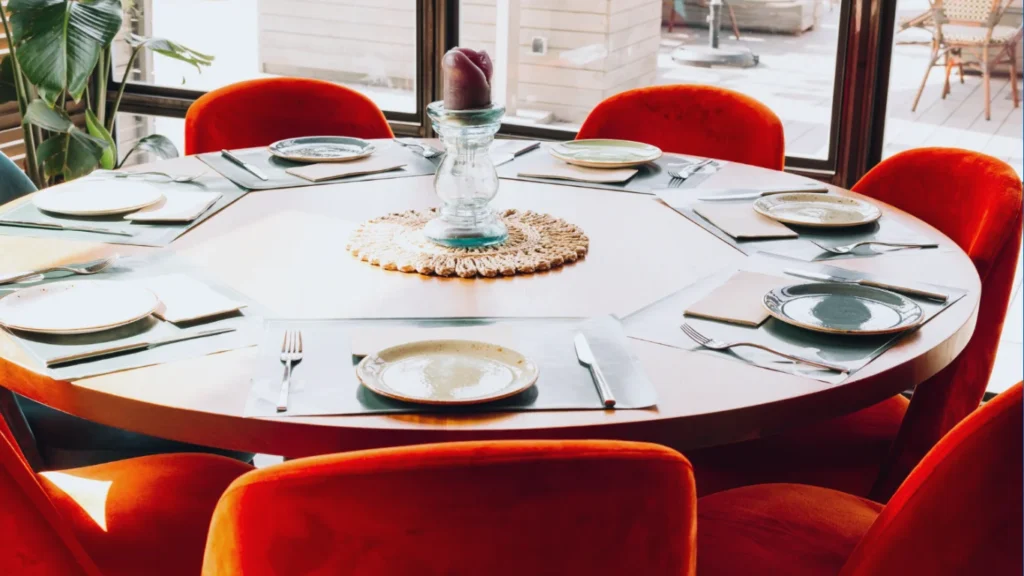
Finally, proportions have shifted to support modern lifestyles. Larger round tables are becoming common in open-plan homes where dining areas merge with living spaces. While smaller versions suit compact rooms, expanded diameters accommodate more seating without sacrificing intimacy.
Because everyone faces the center equally, conversation flows naturally. There is no head position at the table. As a result, gatherings feel inclusive rather than hierarchical, which encourages relaxed and balanced interaction.
Additionally, balanced scaling ensures that the table does not appear overcrowded with dishes or decor. With integrated serving features and stable pedestal bases, larger round tables remain functional even during extended meals.
Therefore, proportion planning has become an essential part of the design trend, aligning spatial efficiency with social comfort.
Bottomline
Round dining tables have evolved beyond simple space-saving solutions. Today, their design reflects careful consideration of material, structure, usability, and proportion. Marble surfaces anchor the room visually, while built-in Lazy Susan elements solve accessibility concerns.
Pedestal bases enhance flexibility and reinforce symmetry. At the same time, refined finishes ensure durability without compromising style. Finally, thoughtful scaling supports modern social habits and open layouts.
When you evaluate these design trends together, you gain a clearer framework for selecting a table that fits both your space and your lifestyle. Understanding these shifts allows you to choose with confidence rather than hesitation.