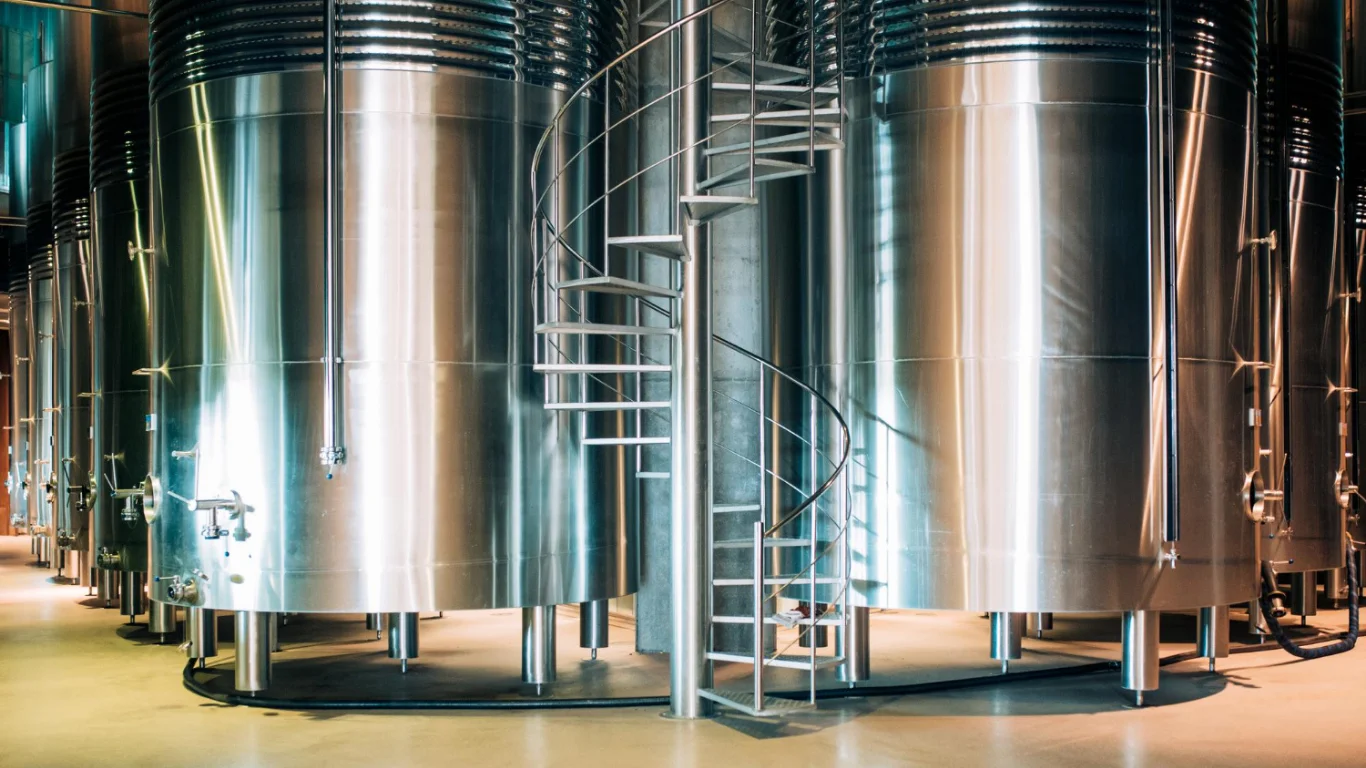
Most tanks are built to last. That’s the whole point. Thick walls, solid welds, carefully engineered designs. And yet, many tanks still wear out far sooner than expected.
Why does that happen?
More often than not, the problem doesn’t start with the tank itself. It starts with the smaller components attached to it. The parts that get installed quickly, adjusted often, and rarely thought about again until something goes wrong.
Let’s talk about fittings. Because if you want your tank to last, that’s where the conversation really begins.
Tank failure usually starts quietly
Tank problems rarely show up all at once. There’s no dramatic moment where everything collapses. Instead, it’s a slow process. A drip that’s easy to ignore. A slight discoloration around a port. A gasket that needs tightening more often than it should.
These small signs are easy to brush off, especially when the tank itself still looks solid. But those early warnings matter. They’re usually telling you that stress is building where the tank connects to the rest of the system.
Connection points take a beating. They deal with pressure changes, temperature swings, vibration, cleaning cycles, and constant mechanical load. Over time, even minor issues at these points can transfer stress into the tank wall itself.
That’s when things start to get expensive.
Why fittings are often the weak link
When tanks are specified, a lot of attention goes into size, capacity, and material. Fittings, on the other hand, are often chosen later, sometimes under time pressure or budget constraints.
That’s understandable. Fittings look simple. They’re small. They don’t feel critical.
But they’re doing a lot of work.
Every fitting creates an opening in the tank. That opening has to maintain a seal, handle stress, and stay compatible with whatever’s flowing through it. If the fitting material doesn’t match the tank or the process, problems show up fast. Corrosion starts around the edges. Threads wear unevenly. Seals get compromised.
Once that happens, the tank is no longer operating as designed. And the longer it runs that way, the more damage accumulates.
Material quality makes a bigger difference than most people think
Not all materials age the same way. Some handle pressure well but struggle with corrosion. Others resist chemicals but fatigue under repeated stress.
When fittings are made from lower-grade materials, they can become the first point of failure in an otherwise well-built system. Surface pitting, galling, or micro-cracks may seem minor at first, but they weaken the entire connection over time.
High-quality materials behave differently. They maintain their structure under stress. They resist corrosion more evenly. They’re less likely to degrade at the sealing surface, which is where leaks usually begin.
This matters because once a fitting starts to break down, the tank opening is forced to compensate. That extra strain doesn’t stay localized. It spreads.
Design details that quietly protect your tank
It’s not just what a fitting is made of. It’s how it’s made.
Precision matters more than people realize. Poorly machined fittings can sit slightly off-axis or apply uneven pressure to the tank wall. That misalignment might be invisible during installation, but it shows up later as fatigue, cracking, or warped sealing surfaces.
Good connection design distributes stress evenly. It supports the tank instead of pulling against it. Smooth internal transitions reduce turbulence, which cuts down on erosion and buildup near the opening.
Over time, these small design choices add up. The tank experiences less mechanical strain, fewer thermal shocks, and less wear around its most vulnerable points.
Pressure, temperature, and the reality of daily use
In real-world operation, tanks don’t live in perfect conditions. Pressure fluctuates. Temperatures rise and fall. Cleaning cycles push materials to their limits.
Each cycle adds a little more stress to the system. If fittings aren’t designed to handle those conditions consistently, they become stress concentrators. That’s when cracks start forming near ports or welds, even if the tank shell itself is thick and well-built.
Choosing components that can handle the full operating range isn’t overengineering. It’s basic protection. When fittings perform predictably under pressure and heat, the tank doesn’t have to absorb that shock.
Maintenance becomes easier when fittings do their job
Here’s something that doesn’t get talked about enough. The right fittings don’t just extend tank life. They also make maintenance less frustrating.
When surfaces are smooth and materials hold up well, cleaning takes less effort. There’s less buildup, fewer crevices, and less risk of damaging the tank opening during disassembly. Threads don’t seize. Seals don’t deform as quickly.
That consistency matters. Every time a fitting is removed and reinstalled, the tank opening is at risk. Reducing how often problems occur reduces how often those connections are disturbed.
In the long run, that alone can add years to a tank’s usable life.
Matching fittings to the job they actually do
It’s tempting to think of fittings as interchangeable. If the size matches, it should work, right?
Not always.
Different processes place different demands on fittings. Some require frequent cleaning. Others involve aggressive chemicals or constant pressure changes. A fitting that performs well in one application may struggle in another.
Matching specifications to real operating conditions helps prevent surprises down the road. That includes material grade, surface finish, pressure rating, and connection style. When everything works together, the tank experiences less strain overall.
This is where thoughtfully selected stainless steel tank fittings quietly support the system by maintaining reliable, low-stress connections instead of becoming recurring problem points.
Small decisions that add up over time
It’s easy to focus on the big components when planning a system. Tanks, pumps, controls. Those are visible and easy to justify.
Fittings don’t get that attention. But they’re involved in nearly every failure story.
Leaks that keep coming back. Corrosion that spreads outward from a port. Cracks that form where stress was never meant to concentrate. In many cases, the tank didn’t fail on its own. It was pushed there.
Choosing the right fittings won’t make a tank indestructible. But it will give it a better chance to perform as intended for as long as possible. Fewer repairs. Less downtime. More predictable operation.
And isn’t that the goal?
When small components work the way they should, the whole system benefits. The tank stays healthier. Maintenance stays manageable. And the lifespan you expected at the start becomes far more realistic.
Sometimes, extending tank life isn’t about upgrading the biggest piece of equipment. It’s about making smarter choices at the connection points that matter most.