Here’s what nobody tells you about kitchen walls: they endure absolute chaos. Bacon grease flies everywhere during breakfast. Tomato sauce explodes mid-stir. Hard water leaves its signature near the faucet, again and again. Yet protection and beauty aren’t mutually exclusive concepts—far from it.
When you nail your kitchen backsplash ideas, you’re creating a surface that handles real-life cooking messes while elevating your space into something genuinely special. Imagine wiping down yesterday’s dinner splatter in under fifteen seconds, all while your kitchen looks like it belongs in a design magazine. That’s the goal, and it’s completely achievable without draining your renovation budget.
Kitchen Backsplash Tile That Performs Under Pressure
Look, falling for gorgeous tiles is easy. Making sure that tile survives your actual cooking habits? That requires strategy. The homeowners who avoid buyer’s remorse start by honestly assessing their splash zones, then match materials to real-world demands.
Mapping Your Kitchen’s Battle Zones
Every kitchen has high-impact areas and calmer corners. This distinction matters enormously when you’re selecting a functional kitchen backsplash. Behind your cooktop, you’re dealing with relentless heat, billowing steam, and airborne grease. Near the sink, it’s constant water exposure mixed with dish soap residue.
Here’s something interesting: recent data shows that 71 percent of designers said backsplashes are becoming statement pieces—mainly through bold colors and unique patterns. Translation? You’re not stuck with bland neutrals just because you need protection.
Areas behind your range deserve serious coverage—think 18 to 24 inches extending upward from the counter. Less intense zones, like where your coffee maker sits or where you chop vegetables, can work perfectly fine with standard 4-inch heights. Consider your actual cooking patterns instead of just following where cabinetry ends.
What Actually Lasts: A Material Reality Check
When choosing kitchen backsplash tile, prioritize materials that laugh at stains, reject water like it’s their job, and hide the inevitable minor scratches that come with daily life. Porcelain tops this list—it tolerates heat reaching 500 degrees and absorbs essentially zero water.
Ceramic tiles deliver beautifully too, though you want glazed versions in cooking zones. That glaze acts as a defensive shield, repelling grease and cleaning up with nothing more than warm water and basic dish soap. Avoid unglazed or heavily textured options near heat sources—they become grease magnets, trapping residue in every tiny gap.
Natural stone brings undeniable beauty but demands brutal honesty about upkeep. Marble etches the moment acidic ingredients touch it. Travertine’s porous structure absorbs olive oil like it’s designed for it. Reserve these materials for low-risk areas like coffee stations where they can shine without constant crisis management.
Once you’ve identified where performance matters most, let’s address the single biggest practical concern: how quickly you can erase last night’s dinner disaster.
Cleaning Reality: What Actually Works
Smooth, glossy finishes win the cleaning wars every single time. Matte surfaces excel at hiding water spots, sure, but their micro-texture can trap grease particles. If you’re someone who actually uses that range nightly, glossy tiles in cooking zones simply make life easier.
Grout lines create more impact than most people anticipate.
Wide joints become grime collectors, while tight spacing (around 1/16 inch) dramatically reduces cleaning frustration. Epoxy grout costs more initially but eliminates sealing requirements forever and resists staining infinitely better than traditional cement-based grout.
Glass tiles warrant special attention here—they’re completely non-porous, never require sealing, and wipe absolutely clean. Just opt for larger glass formats over tiny mosaics to minimize grout line management.
With durability and maintenance under control, let’s explore designs that create that expensive “custom kitchen” appearance—minus the custom price tag and complicated upkeep.
Modern Backsplash Designs Worth Copying
Today’s modern backsplash designs emphasize clean lines and minimal grout visibility, achieving that high-end slab aesthetic without actual slab costs. Large-format tiles (12×24 inches or larger) create maximum impact while keeping maintenance demands low.
Full-Height Drama Behind the Range
Taking tile from the countertop all the way to the ceiling behind your cooktop generates serious focal-point power. This technique works exceptionally well with vertically-stacked patterns that pull your eye upward, making typical 8-foot ceilings appear taller.
Consider this: the number of homeowners taking on a ‘premium kitchen renovation’—spending a minimum of $180,000—has grown by 20% over the past year . Many incorporate floor-to-ceiling backsplash moments that justify the investment through pure visual drama.
Align grout lines with cabinet edges and electrical outlets for that built-in, intentional appearance. This subtle detail separates amateur installations from professional results, and planning it during your layout phase is surprisingly straightforward.
Subtle Sophistication Through Mixed Finishes
For those who prefer understated elegance over bold statements, combining matte and gloss finishes in identical tile colors adds dimensional complexity without creating competition. Same color, different finishes—that’s your formula for quiet sophistication.This approach shines in transitional kitchens where you’re bridging traditional cabinetry with contemporary countertops.
The finish variation creates visible texture that remains subtle, building depth without generating visual clutter. Enhance this effect with warm LED under-cabinet lighting to really emphasize the finish interplay.These design strategies work brilliantly—but only when executed with appropriate materials. Let’s decode your tile options so you can confidently match performance, aesthetics, and budget.
Material Selection: Your Options Decoded
Porcelain: The Indestructible Overachiever
Porcelain tolerates everything—extreme heat, persistent moisture, stubborn stains, daily scratches. It’s virtually indestructible, explaining its dominance in active family kitchens. Contemporary porcelain convincingly mimics marble, concrete, zellige, even terrazzo—without any of the maintenance complications those materials demand.
Choose porcelain rated specifically for wall applications (some floor-rated tiles carry too much weight). Rectified edges allow tighter grout lines for that sleek, contemporary aesthetic most homeowners pursue.
Ceramic: Budget-Conscious Performance
If porcelain is the straight-A student, ceramic tile is its more affordable sibling—still highly capable when you know which quality levels and finishes to emphasize. Glazed ceramic in mid-to-high quality ranges performs admirably in most kitchen scenarios.
Glaze quality determines everything. Cheap ceramic tiles develop wear patterns quickly, particularly in high-use zones. Choose reputable manufacturers and you’ll enjoy years of reliable service at a fraction of porcelain’s price point.
Glass Tile: Expanding Light and Space
When square footage and natural light are limited, glass tile becomes your secret weapon for visually enlarging small or dim kitchens while remaining remarkably easy to maintain. Glass reflects light differently throughout the day, adding subtle animation to your walls.Use white thinset beneath transparent glass to prevent visible adhesive lines.
Larger glass formats (3×6 subway or bigger) reduce grout maintenance while preserving that luminous quality glass provides.You’ve selected your material; now let’s arrange it in ways that feel intentional, current, and perfectly proportioned to your kitchen’s dimensions.
Layout and Pattern Strategies for Visual Impact
Subway Tile Gets a Contemporary Update
Traditional subway tile remains relevant, but fresh arrangements keep it feeling current. Vertical stacking creates crisp, contemporary lines that feel distinctly 2025. Narrow subway formats (2×8 or 2×10) offer familiar shapes with updated proportions.
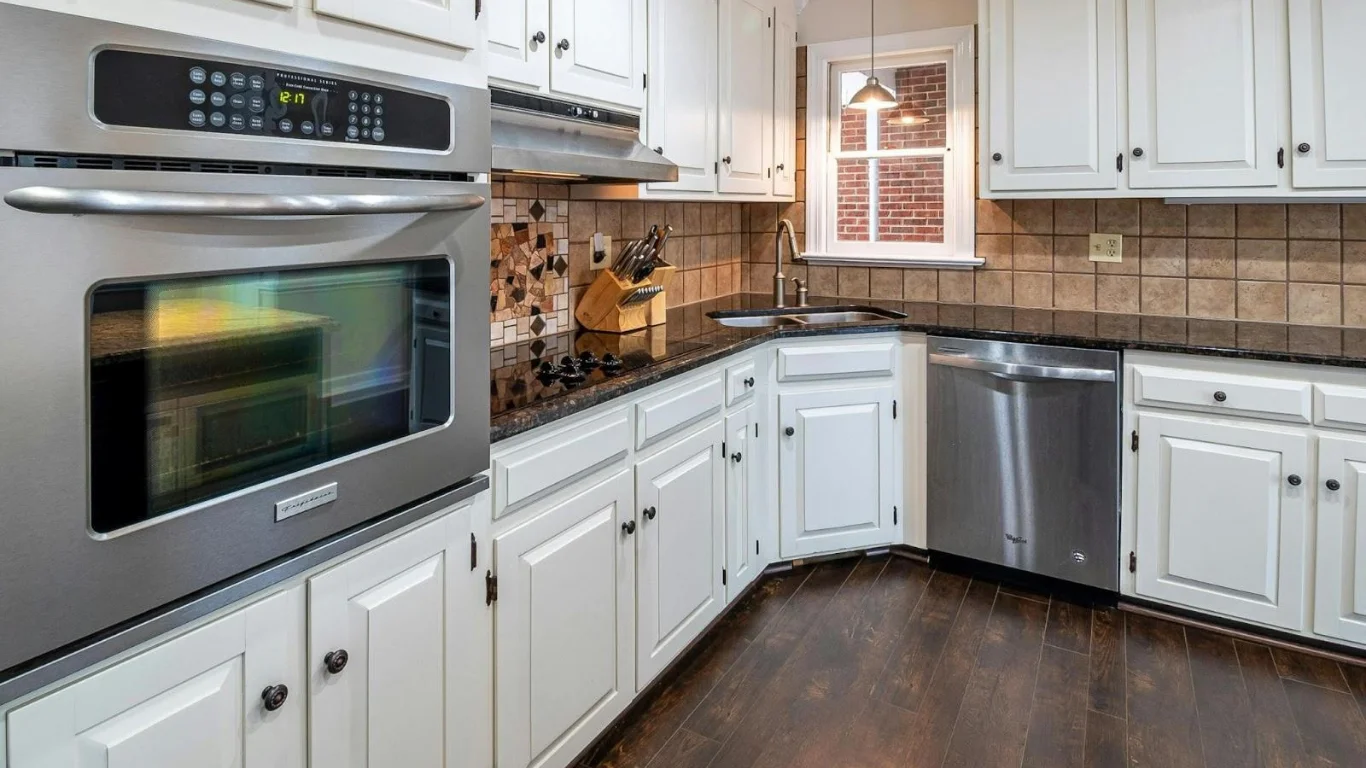
Grout color transforms the entire mood. White grout on white tile communicates traditional cleanliness. Contrasting dark grout adds graphic definition and conceals staining better long-term.
Geometric Patterns With Purpose
Hexagons, scallops, and elongated diamonds generate visual interest without overwhelming compact kitchens. The principle here: select one statement geometry and maintain calmer counters and cabinetry. You want focal-point intrigue, not sensory overload.
Monochrome geometric designs feel sophisticated and enduring. Multi-color geometrics succeed too, but demand careful coordination with existing cabinet colors and countertop patterns.
Pattern establishes rhythm; color and finish dictate atmosphere—and choosing both strategically ensures your backsplash always appears intentional rather than accidental.
Final Thoughts on Your Backsplash Project
A stylish kitchen backsplash doesn’t demand choosing between beauty and function—you genuinely get both. Concentrate on high-performance materials in splash-prone areas, select patterns that suit your kitchen’s scale, and never overlook details like grout selection and outlet alignment.
The right tile protects your walls for decades while making your kitchen feel professionally designed. Begin by ordering samples to view in your actual space, testing them against your lighting and existing finishes, and you’ll sidestep expensive regrets. Your kitchen deserves protection that’s equally beautiful and practical.
FAQ’s
Should my backsplash match or contrast my countertop?
Contrast typically performs better, especially with busy countertops. If your granite or quartz features heavy veining, select simpler backsplash tiles that complement without competing. Matching can feel excessively coordinated and dated.
Is epoxy grout worth the extra cost?
Absolutely, particularly behind your stove and sink. Epoxy eliminates sealing requirements, resists stains permanently, and maintains its appearance for decades. Installation is more challenging, but long-term performance justifies the investment.
Can I tile over the existing backsplash?
Sometimes, provided the existing tile adheres firmly and creates a flat surface. You’ll need to roughen glossy surfaces and apply appropriate thinset. However, removing old tile often delivers better long-term results.