GardenersIf you’ve been following the latest in landscape design, you’ve probably noticed that trees are having a major moment. And for good reason. Trees aren’t just beautiful—they’re workhorses for your outdoor space. They provide shade, privacy, structural interest, habitat for wildlife, and that lush, mature feeling that transforms a plain yard into an actual destination. But here’s what many DIY gardeners discover after a year or two of yard projects: trees aren’t something you can plant, walk away, and expect to thrive on their own.
Whether you’re planning a complete landscape overhaul or making strategic additions to an existing garden, understanding how to integrate professional tree care into your vision is what separates yards that look great for a season from ones that look stunning for decades. This guide walks you through the essential thinking—from selection and placement to long-term health management.
Why Trees Matter in Landscape Design
Trees do something no other landscape element can quite accomplish: they anchor a space. A well-placed tree instantly creates visual weight, establishes scale, and frames your home’s architecture in ways that shrubs and perennials simply can’t match. But trees also solve practical problems. That hot afternoon sun beating down on your patio? A mature deciduous tree solves that. Privacy from your neighbor’s overlooking second-story window? A columnar evergreen does that job beautifully. Erosion on a sloped yard? A tree’s root system stabilizes soil better than anything else.
The challenge is that adding trees to your landscape isn’t like adding a hydrangea or a new perennial bed. Trees represent a 10, 20, or 50-year commitment. They grow, they change shape, they develop their own personality. And because they have such longevity and impact, getting them right from the start—and maintaining them properly—matters enormously.
Planning Your Landscape with Trees in MindSelecting the Right Trees for Your Space
Before you fall in love with a specific tree at the nursery, take a step back and think systematically about what you’re trying to accomplish.
What’s your light situation?
This is non-negotiable. A sugar maple that needs full sun won’t thrive in partial shade, no matter how much you water it. Similarly, a redbud that loves morning sun and afternoon protection will struggle in an exposed, all-day-sun location. Spend time observing your yard—early morning, midday, late afternoon. Notice where the sun actually falls and for how long.
What’s your soil like?
Trees have strong preferences. Some are adaptable generalists; others are fussy. An oak or birch might thrive in slightly acidic, well-draining soil, while a crabapple can handle tighter clay and a more neutral pH. If you’re serious about gardening, you probably know your soil already. If you haven’t had it tested, now’s a good time.
How much space does this tree actually need?
This is where many people make mistakes. They see a 6-foot sapling and think, “Perfect for that corner.” They don’t account for the fact that a red maple can eventually spread 40 feet wide and grow 60 feet tall. Read the mature dimensions, not the nursery tag size. Ask yourself: will this tree eventually interfere with power lines, your roof, your neighbor’s space, or your ability to use your yard?
What does this tree do for your design?
Are you looking for shade, seasonal color, screening, architectural form, wildlife habitat, or a combination? A weeping willow creates an entirely different mood than a stiff columnar juniper. A dogwood provides delicate spring color and interesting branch structure in winter. A serviceberry offers spring flowers, summer berries for birds, and reliable fall color. Knowing what you want the tree to contribute to your landscape helps you make choices that feel intentional rather than random.
Placement Strategies
Where you plant a tree is just as important as which tree you plant. Here are the principles that designers use:
Layer your view: Plant trees at different distances from your house and seating areas. A tree right outside your kitchen window creates one kind of intimacy—you see birds, branches moving, seasonal change up close. A tree in the middle distance creates mid-ground depth. Trees at the back of your property create a natural backdrop and sense of enclosure. Together, they create visual depth that makes your landscape feel larger and more sophisticated.
Screen with intention: If you’re planting trees for privacy, think about where the sightline actually needs blocking. Sometimes one well-placed tree does more work than three poorly placed ones. A tall screen on the north side of your patio blocks afternoon neighbor views without creating undesirable shade. Trees on the south side of your house might warm your space in winter when they’re bare and cool it in summer when they’re leafed out.
Respect sightlines and scale: Don’t let a tree hide your home’s good architecture. Don’t plant a 40-foot tree in front of a cottage-style house where it overwhelms the proportions. Think about how the mature tree will look from the street, from inside your home, and from neighboring properties.
Plan for succession: Gardens that look great for 30 years and then suddenly feel empty have usually made this mistake: they planted everything on the same timeline. Instead, include trees at different life stages in your plan. A newly planted sapling won’t provide much shade for 5 years, so maybe you also plant something with earlier impact. Or plant a fast-growing (but shorter-lived) tree next to a slow-growing (but very long-lived) tree so you get beauty and function now, and valuable maturity later.
Professional Tree Care in DIY Landscaping
Here’s where many DIY gardeners need to shift their thinking. While you can definitely select, plant, and maintain shrubs and perennials yourself, trees often benefit from professional guidance and care.
When to Bring in the Experts
For initial planting decisions: Before you buy that tree, it’s worth consulting with an arborist or experienced tree care company. They can assess your specific site conditions—soil, drainage, wind exposure, light patterns—and recommend species that are genuinely suited to your space, not just pretty at the nursery. They understand local microclimates, regional pests, and disease pressures that affect tree health in your area. A professional evaluation might save you from costly mistakes (like planting a tree that dies in five years).
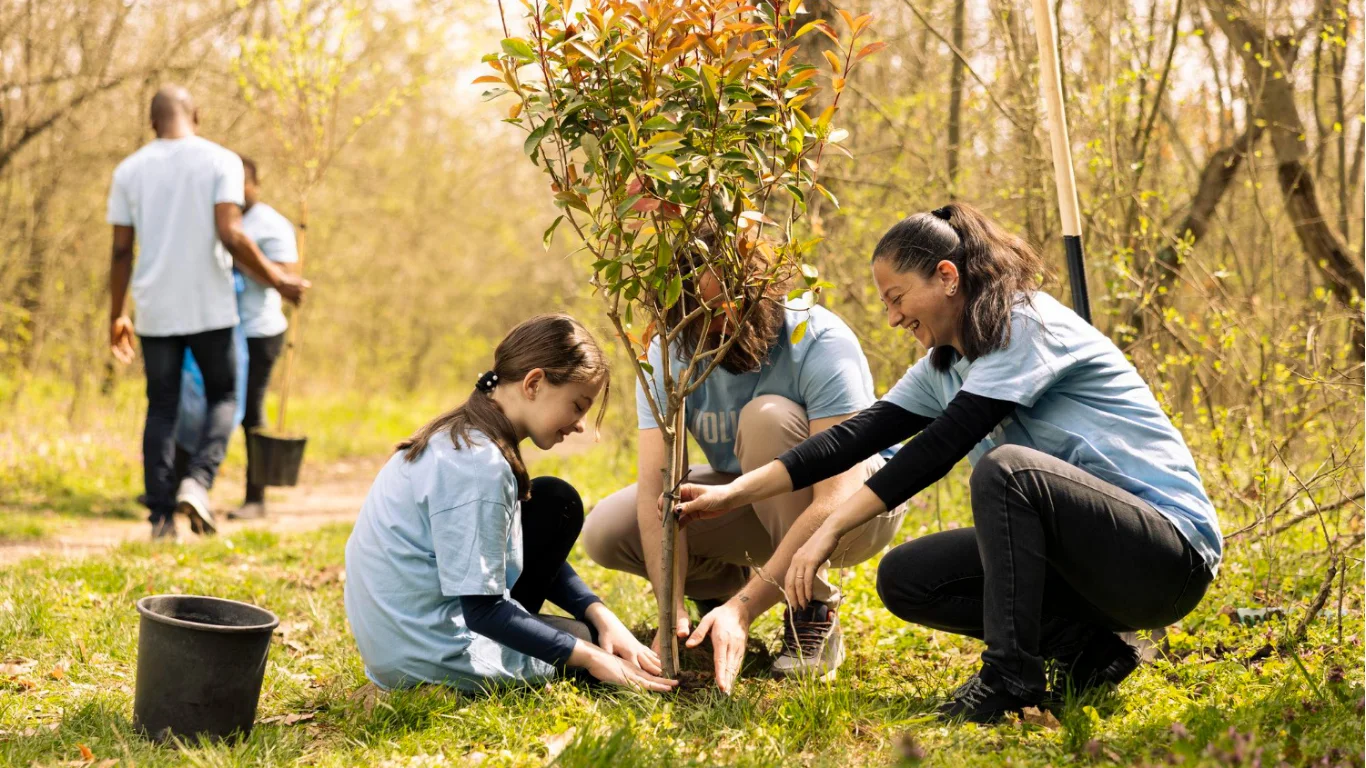
For planting itself: This might surprise you, but improper planting is one of the biggest reasons trees struggle. The hole needs to be the right depth and width. The root collar (where roots flare out from the trunk) needs to be at exactly the right level. Backfill soil needs proper amendment. Staking and guy-wire tension need to be precise. Trees that are planted too deep, too loose, or with amended soil that’s too rich often decline years later. If you’re planting a large or expensive specimen, having it done professionally gives you confidence it’s being done right.
For problem-solving: If you inherit mature trees with your property, or if an established tree suddenly starts struggling, an arborist can diagnose what’s wrong. Is it disease? Pest damage? Compacted soil? Poor drainage? Over-pruning by a previous owner? Sometimes the solution is straightforward; sometimes it requires specific care. When you’re emotionally or aesthetically invested in keeping a tree healthy, expert diagnosis is worth the investment.
For structural pruning: Light deadheading and shape maintenance you can handle. But if a tree needs significant pruning—removing large branches, correcting poor structure, removing codominant leaders—you want someone who understands tree physiology. Bad pruning can create wounds that don’t heal properly, making trees vulnerable to disease and decay. Certified arborists like those at Wayne’s Tree Service of Somerville understand the science of proper cuts that promote tree health while reducing liability and enhancing curb appeal. This is especially important for valuable or prominent trees.
For hazard assessment: Sometimes a tree is beautiful but risky—it’s leaning dangerously, has included bark in branch crotches, or hangs over a structure. A professional can help you decide whether a tree can be saved through cabling and bracing, or whether removal is the safest option. This matters both for your safety and for insurance purposes if tree failure causes damage.
For removal and land clearing: If you need to remove a tree—whether it’s dead, diseased, in the way of construction, or creating shade problems—removal can be complex, especially in residential settings with power lines, structures, and tight spaces nearby. DIY tree removal is genuinely dangerous. Professional removal ensures the work is done safely, efficiently, and with proper cleanup.
Beyond Planting: Long-Term Tree Health
Once your trees are established, they’re not maintenance-free, but they shouldn’t demand constant attention either. Here’s the rhythm of tree care:
Year one: establishment. Newly planted trees need consistent watering during their first growing season. The rule of thumb is about 1 inch of water per week from rain or irrigation. Mulch around the base (not touching the trunk) helps retain moisture. Beyond watering and mulch, mostly let the tree settle in.
Years two through five: development. Once established, most trees need moderate watering during droughts and seasonal pruning to remove crossing branches, dead wood, or branches that are interfering with structures. You’re essentially guiding the tree’s natural development without forcing it into an unnatural shape.
Year five and beyond: maintenance. Mature trees generally thrive on neglect—they don’t need fertilizer, frequent pruning, or babying. What they do benefit from is occasional assessment. Dead branches should come off. Branches rubbing against structures should be raised or removed. If storm damage occurs, prompt removal of broken limbs prevents infection and further damage.
The specifics of care depend entirely on the species. An oak needs different attention than a crabapple. A tree in a compacted urban yard needs different care than one in a peaceful suburb. This is why having a relationship with a local arborist—someone who understands your specific trees and your region’s conditions—is genuinely valuable.
The Integration: Design and Care Working Together
What separates a landscape that looks like a collection of plants from one that feels like a genuine garden is coherence. Your trees should feel like they belong—because you chose them thoughtfully and placed them strategically. And they should thrive—because you’ve given them what they need to succeed.
That integration happens when you think about both design and care from the beginning. It’s not just planting a tree and hoping. It’s selecting the right species for your conditions, placing it where it solves actual problems in your landscape, planting it properly, and then maintaining it appropriately as it matures.
For many of us, this means being willing to ask for help—not because we can’t do gardening, but because trees are specialized. They’re long-term investments that deserve professional attention at key moments. That’s not giving up on DIY gardening; it’s being smart about where professional expertise genuinely adds value.
Conclusion
Trees are the bones of a great landscape. Every other plant, every hardscape element, every design choice relates to them. So it’s worth taking time to get them right—choosing species suited to your site, placing them with intention, planting them properly, and maintaining them consistently as they grow.
Your landscape will reward the thoughtfulness. In five years, you’ll have shade where you needed it. In ten years, you’ll have privacy screens that feel natural and abundant. In twenty years, you’ll have the mature, established garden that people envy—not because you got lucky, but because you planned well and cared for your trees as they grew.