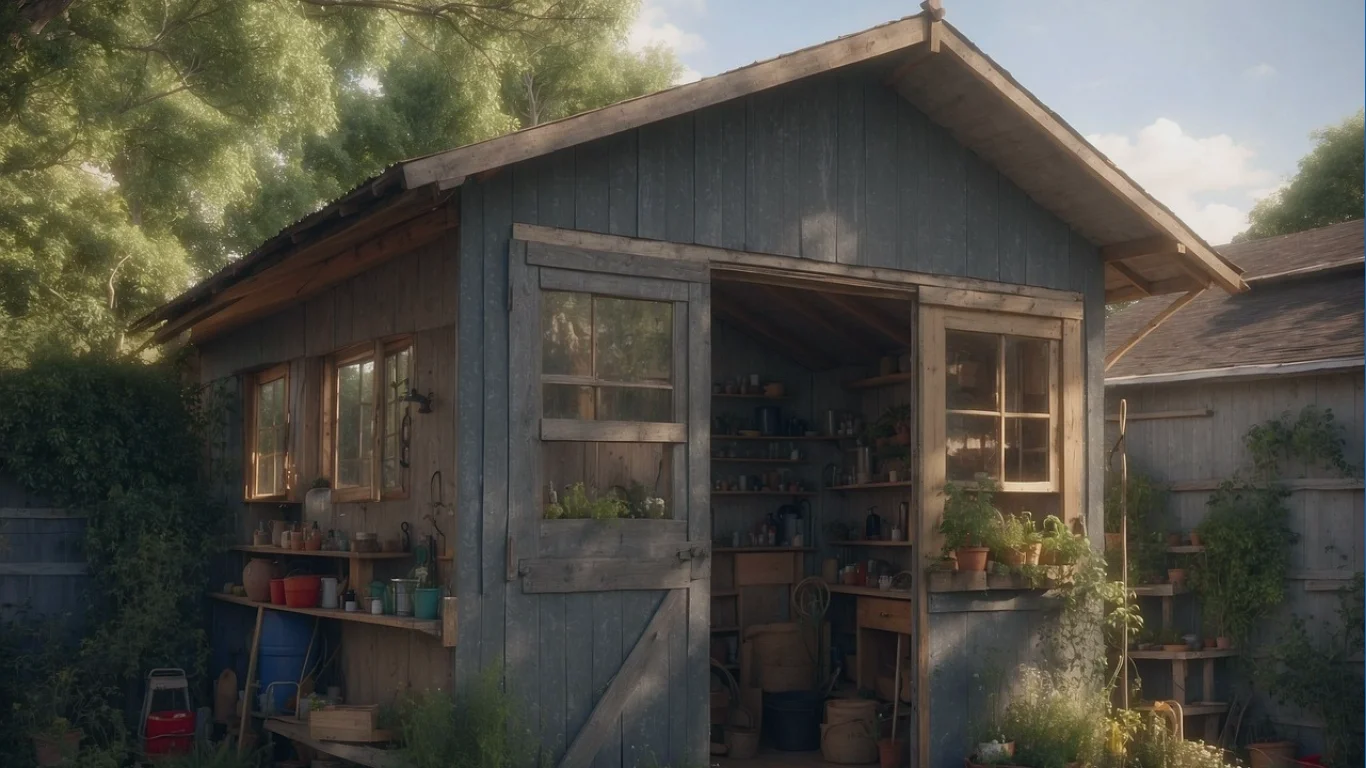
Ask most people what they keep in their garden shed and you’ll get a fairly predictable inventory. A lawnmower with a temperamental starter cord. Three half-empty bags of compost that have fused together. A collection of canes that seemed useful once. Several spiders of escalating ambition. The shed, in the popular imagination, is a place where things go to be forgotten about — a dumping ground with delusions of organisation.
And yet. Spend any time in the company of people who’ve thought properly about their shed —designed it well, built it on a solid base, bought the right size for their needs — and you’ll encounter something closer to genuine enthusiasm. The shed, done properly, is one of the most useful and versatile additions you can make to a garden. It’s a workshop, a potting station, a retreat, a home office, a hobby room. It just happens to also store the lawnmower.
If you’re thinking about buying a garden shed — whether for the first time or as a replacement for the ailing structure currently occupying a corner of your garden — this guide will help you think through the decisions that actually matter.
Size: The One Thing Everyone Gets Wrong
The single most consistent piece of advice from anyone who has bought a garden shed is this: buy bigger than you think you need. Not marginally bigger. Meaningfully bigger.
This is partly because we are uniformly terrible at estimating how much we accumulate. The shed that seems generous when you’re buying it — “that’ll fit the lawnmower and the bikes and the garden tools easily” — has a way of becoming oppressively full within eighteen months as you add a workbench, a propagator, a bag of bird food, and three things bought at the garden centre with vague intentions.
But it’s also because a shed that has a little space beyond pure storage becomes a fundamentally more useful object. A shed in which you can stand upright, turn around, and actually do something — pot on a plant, sharpen a tool, sit with a cup of tea during a light shower — is worth considerably more than the same footprint crammed floor to ceiling.
As a starting point: if you’re thinking a 6×4, buy an 8×6. If you’re thinking an 8×6, consider a 10×8. The extra cost at the point of purchase is almost always judged worthwhile within the first year.
What to Look for in a Timber Shed
The vast majority of garden sheds sold in the UK are made from timber, and within that category the differences in quality are substantial. The key variables are cladding thickness, wood treatment, and roof construction — and it’s worth understanding each before you buy.
Cladding is the overlapping horizontal boarding you see on the outside of most sheds. Thicker cladding means better weather resistance, better insulation, and a structure that will last significantly longer. Budget sheds typically use 8mm or 10mm overlap cladding, which is serviceable but prone to warping and splitting after a few seasons. Mid-range sheds often use tongue-and-groove construction — the boards interlock rather than simply overlapping — which provides a much tighter fit, better water resistance, and a noticeably more solid feel. For a shed that will serve you well for a decade or more, tongue-and-groove cladding of at least 12mm is worth prioritising.
Wood treatment matters enormously for longevity. Most new timber sheds are sold pressure-treated with a preservative that penetrates deep into the wood rather than simply coating the surface. A good pressure treatment should protect against rot and insect damage for 15 years or more without requiring any additional treatment from you. Sheds that are simply dip-treated or surface-coated will need retreating every year or two, which sounds minor but adds up to a significant maintenance commitment over the life of the shed.
The roof deserves more attention than it usually gets at the point of purchase. Most sheds come with either a pent (single sloped) or apex (ridged) roof, both of which work perfectly well provided the felt is properly installed and of adequate quality. Mineral felt — the thicker, heavier type — outlasts standard shed felt considerably. Check how the felt is fixed: staples alone are less durable than a combination of adhesive and fixings. Some better-quality sheds now offer rubber or EPDM roofing, which can last 20 years without attention and is well worth considering.
For a well-curated range of timber sheds at various sizes and price points, Dobbies Garden Centres are worth a look — their garden sheds collection covers everything from compact storage units to full-size workshop sheds, with clear specifications that make it easy to compare construction quality before you commit.
The Base: Don’t Skip This Step
If there is one thing that will determine how long your shed lasts more than any other, it is the quality of the base it sits on. A shed placed on uneven, soft, or poorly-drained ground will move and flex through the seasons, causing the frame to distort, doors to jam, and joints to fail. It will also create the damp conditions at floor level that are responsible for most of the rot that prematurely ends a shed’s useful life.
A concrete slab is the gold standard and, where a shed is going to be a permanent fixture, worth the additional effort and cost. It needs to be level, it needs to extend at least 50mm beyond the shed footprint on all sides, and it needs to be properly mixed and cured. This is a job that can be done over a weekend with hired equipment, or handed to a local groundworker for a very reasonable day rate.
Pressure-treated timber bearers — lengths of treated timber running across the base to create a small air gap between the shed floor and the ground — are an alternative that works well on an existing hard surface or compacted gravel base. The air gap they create reduces moisture accumulation under the floor significantly. Avoid simply placing a shed directly on soil or grass: the temptation to skip the base preparation almost always costs more in repairs or early replacement than the time saved.
Plastic shed base grids are a relatively recent innovation that deserve mention. Interlocking hollow plastic tiles create a permeable, stable base that allows drainage while keeping the shed floor clear of the ground. They’re quicker to lay than concrete, can be repositioned if needed, and perform well in most conditions. They’ve become the preferred choice for many installers and are worth considering if you want a capable base without the permanence of concrete.
Metal and Plastic Sheds: When They Make Sense
Timber is the sentimental favourite and, for most purposes, still the most satisfying material for a garden shed. But metal and plastic options have carved out a genuine niche and are worth considering honestly rather than dismissing on aesthetic grounds alone.
Metal sheds — typically galvanised steel — are virtually maintenance-free. They won’t rot, they’re resistant to fire, and they provide decent security. The downsides are equally honest: they’re not especially warm in summer or winter, prone to condensation on the inside unless ventilated properly, and have an industrial aesthetic that sits awkwardly in most domestic gardens. For pure storage of tools, equipment, and garden chemicals, however, they do their job reliably for years without demanding anything from you.
Plastic (polypropylene or UPVC) sheds have improved dramatically in recent years. Modern versions don’t yellow or become brittle in the way early plastic garden buildings did, and the better-quality products now look genuinely respectable. They’re completely weatherproof, require no painting or treating, and will outlast most timber sheds with zero maintenance. The argument against them is largely aesthetic — they lack the warmth and character of timber — but for purely functional applications they are a serious option.
Beyond Storage: The Shed as a Room
The most interesting shift in how people think about garden sheds over the past decade has been the growing acceptance of the shed as a genuine room rather than simply a storage receptacle. Garden offices, hobby rooms, potting sheds, artist studios, teenager retreats, spare sleeping accommodation — sheds have quietly become one of the more creative areas of home improvement.
If you’re buying a shed with any intention of spending time in it — rather than merely visiting it — a few additions make an enormous difference to the experience. Insulation fitted between the frame and the cladding transforms the temperature, making the space usable in autumn and winter without heating becoming prohibitively expensive. A proper electrical supply, installed by a qualified electrician, enables lighting, power tools, a small heater, and the kettle that makes everything significantly more civilised. Shelving and workbench space planned from the outset rather than retrofitted awkwardly later. Ventilation to prevent condensation and keep the air from becoming stale.
A well-equipped shed of this kind can genuinely function as an additional room in a way that changes how you use both the house and the garden. People who work from home in a garden office consistently report that the physical separation from the house — even just the walk across the lawn — creates a psychological distinction between work and home life that improves both. It is, when you think about it, one of the more elegant solutions to a modern problem, housed in one of the most traditional of British garden structures.
Planning Permission and Permitted Development
The good news is that most garden sheds in England fall comfortably within permitted development rights, meaning you can build them without applying for planning permission. The rules broadly state that a shed can be built without permission provided it occupies no more than 50% of the total garden area, is single-storey with a maximum eaves height of 2.5 metres and overall height of 4 metres for a dual-pitched roof (3 metres for any other type), and is not positioned in front of the principal elevation of the house.
There are exceptions. Properties in conservation areas, Areas of Outstanding Natural Beauty, or those with an Article 4 Direction may have additional restrictions. Listed buildings are subject to entirely different rules. If you’re in any doubt, a quick call to your local planning department before you start will save you a good deal of potential difficulty later.
Sheds intended as offices or habitable rooms may attract different rules than those used purely for storage, particularly if they involve plumbing or a permanent electrical installation. Again, checking with your local authority before proceeding is time well spent.
A Few Things Worth Knowing Before You Buy
Delivery and installation deserve more consideration than they sometimes get. A large shed arrives flat-packed and requires a full day to erect properly — two people, decent tools, and ideally a third pair of hands for the roof sections. Many retailers offer an installation service, and for larger or more complex structures this is often money sensibly spent. Check what the installation includes: levelling, base supply, and felt fixing should all be confirmed in advance.
Check the window position and orientation before ordering. A south-facing window floods a shed with pleasant light and warmth; a north-facing one does neither. If the shed is going to be used for growing seedlings or housing plants over winter, this detail matters considerably.
If security is a concern — and for sheds housing bicycles, power tools, or expensive equipment, it should be — factor in the quality of the door and its hinges. Many standard shed doors are secured by fittings that would barely inconvenience someone determined. A hasp and staple secured with a closed-shackle padlock, and hinges with the fixing bolts on the inside rather than accessible from the outside, are worthwhile upgrades that most shed manufacturers offer or that can be fitted easily after purchase.
Finally, and perhaps most importantly: don’t underestimate how much pleasure a good shed adds to a garden. There is something about having a place of your own out there — a small, purposeful structure doing useful work in the corner of the garden — that makes the whole outdoor space feel more considered and more complete. The lawnmower has a home. The tools have a home. And on a drizzly Saturday morning, so do you.