In contemporary residential and commercial projects, the kitchen has evolved into more than a functional workspace. It is now a central design statement. For architects and contractors working on modern builds, achieving a balance between aesthetics and utility is essential. One design solution that continues to gain traction is the use of floating shelves.
This article explores practical and visually compelling kitchen floating shelves ideas tailored for minimalist interiors. It focuses on clean lines, efficient storage, and seamless integration with modern layouts.
Why Floating Shelves Work in Modern Kitchens
Floating shelves offer a streamlined alternative to bulky cabinetry. Unlike a traditional kitchen cabinet, they eliminate visual weight and create a sense of openness. This is especially valuable in smaller kitchens or open-plan layouts where spatial continuity matters.
From a construction standpoint, floating shelves also allow flexibility. They can be installed at custom heights, adjusted to fit architectural features, and adapted across different materials and finishes.
Key advantages include:
- Reduced visual clutter
- Easier access to everyday items
- Cost-effective compared to full cabinetry
- Greater design versatility
For minimalist kitchens, these benefits align directly with the core principle: less, but better.
Material Selection for a Minimalist Aesthetic
Material choice plays a critical role in defining the overall look. The goal is to maintain simplicity while ensuring durability.
1. Natural Wood Finishes
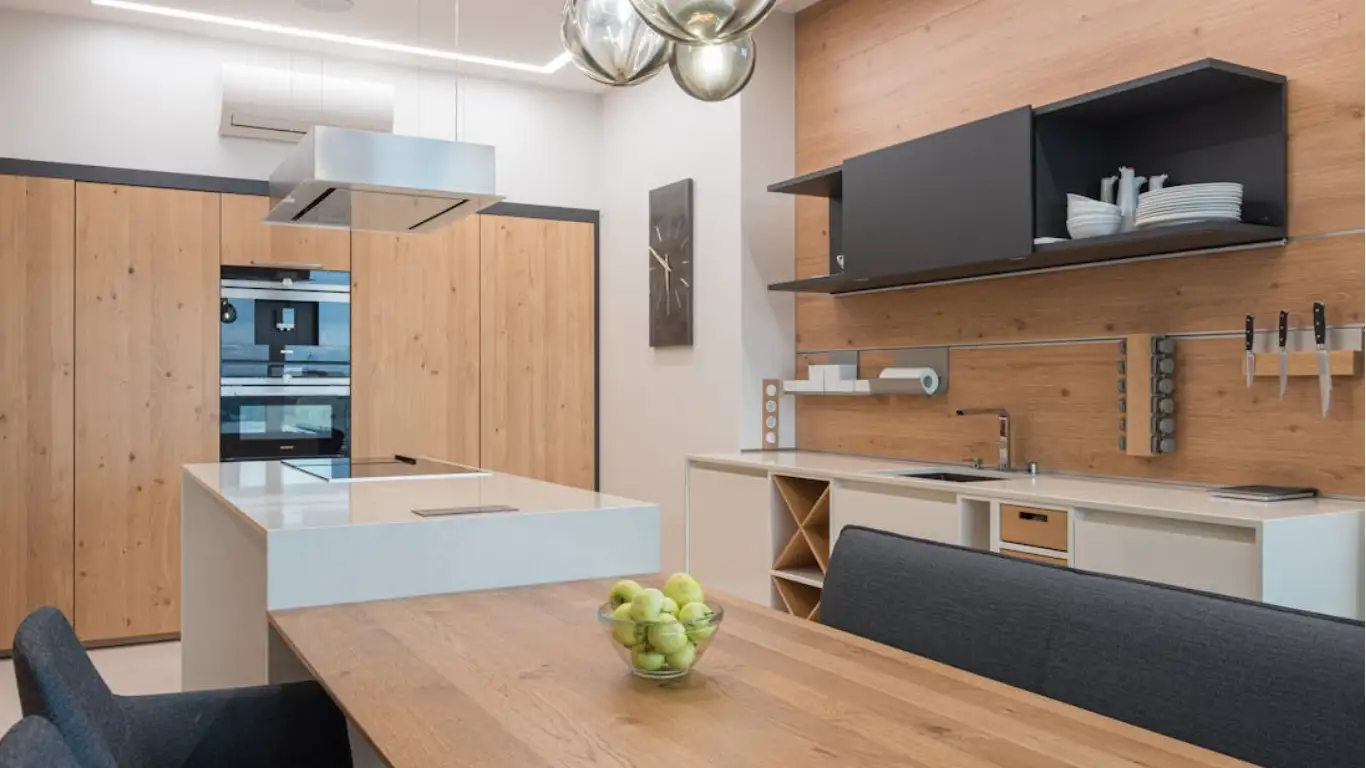
Light oak, ash, or walnut shelves introduce warmth without overpowering the space. These work particularly well in a modern kitchen design that leans toward Scandinavian or Japandi influences.
Tip: Use matte finishes to avoid glare and maintain a soft, understated look.
2. Engineered Stone or Quartz
For a more refined, architectural feel, stone shelves can match countertops or backsplashes. This creates a cohesive and high-end appearance.
Consideration: Ensure proper structural support due to the added weight.
3. Powder-Coated Metal
Metal shelves offer a sleek, industrial edge. Black or white finishes integrate well into monochromatic palettes.
Best use case: Contemporary urban apartments or commercial kitchen spaces.
Layout Strategies for Floating Shelves
Proper placement is essential to both functionality and visual balance. Poorly positioned shelves can disrupt workflow or create clutter.
1. Symmetrical Arrangements
Placing shelves evenly on both sides of a focal point, such as a range hood, creates visual harmony. This works well in structured layouts where symmetry enhances architectural clarity.
2. Asymmetrical Configurations
For a more dynamic look, stagger shelf lengths or heights. This approach suits creative spaces but requires careful planning to avoid visual chaos.
3. Corner Integration
Corners are often underutilized. Floating shelves can turn these areas into practical storage zones without adding bulk.
Styling Principles for Minimalist Shelving
Floating shelves are not just about storage. They are also a display element. However, restraint is key.
Keep It Functional
Only display items that are used regularly. Think plates, glasses, or cooking essentials.
Limit Color Palette
Stick to neutral tones such as white, beige, grey, or muted earth tones. This maintains consistency with a modern kitchen design.
Use Repetition
Repeating similar objects, like identical jars or containers, creates a clean and organized look.
Introduce Subtle Contrast
A few carefully chosen elements, such as a dark ceramic piece or a small plant, can add depth without clutter.
Integrating Floating Shelves with Cabinets
Floating shelves do not need to replace cabinetry entirely. In fact, combining them with a kitchen cabinet system often yields the best results.
Upper Cabinet Replacement
Replace upper cabinets in select sections with floating shelves to open up the space while retaining storage below.
Transitional Zones
Use shelves between tall cabinets or near windows where full cabinetry would feel heavy.
Mixed Storage Systems
Combine closed cabinets for concealed storage with open shelving for frequently used or decorative items.
This hybrid approach offers both practicality and design flexibility.
Lighting Considerations
Lighting enhances the visual impact of floating shelves and improves usability.
Under-Shelf LED Lighting
Installing LED strips beneath shelves provides direct illumination for work surfaces while highlighting displayed items.
Integrated Backlighting
For a more dramatic effect, backlit shelves create depth and emphasize material textures.
Natural Light Alignment
Whenever possible, position shelves to take advantage of natural light. This reduces reliance on artificial lighting and enhances the minimalist feel.
Structural and Installation Considerations
For architects and contractors, proper installation is critical.
Load-Bearing Capacity
Ensure that wall anchors and brackets are suitable for the intended load. This is especially important for stone or heavily loaded shelves.
Hidden Brackets
Use concealed mounting systems to maintain the floating effect. Visible brackets can disrupt the minimalist aesthetic.
Wall Preparation
Solid backing or reinforced drywall may be necessary, particularly in new builds or large-scale projects.
Common Mistakes to Avoid
Even well-designed shelves can fail if execution is poor.
- Overloading shelves with too many items
- Using inconsistent materials or finishes
- Ignoring proportion and scale
- Poor alignment with other kitchen elements
A disciplined approach ensures that the shelves enhance rather than detract from the overall design.
Future Trends in Floating Shelves
Floating shelves continue to evolve alongside kitchen design trends.
- Integrated smart lighting systems
- Modular shelving systems for flexible layouts
- Sustainable materials such as reclaimed wood or eco-friendly composites
These innovations offer new opportunities for architects and contractors to deliver both functionality and forward-thinking design.
Conclusion
Floating shelves are more than a design trend. They are a practical solution that aligns with the principles of modern minimalism. When executed correctly, they enhance spatial perception, improve accessibility, and contribute to a refined aesthetic.
For professionals, the key lies in thoughtful integration. Material selection, layout planning, and structural integrity must all work together to achieve a cohesive result.
OPPOLIA offers turnkey interior solutions, covering everything from interior design to production and installation. With experience spanning over 100 countries and more than 10,000 completed projects, they bring both scale and expertise to large developments.
If you are seeking a reliable partner for your next project, OPPOLIA is a strong choice. Learn more about OPPOLIA cabinets and contact their team today for a free quote.