Learning how to make playful activities lwmfcrafts comes down to one simple loop: choose an easy craft, let the kids make the decisions, then let them play with whatever they made. You don’t need special supplies, just cardboard, paper, glue and a loose plan. I use a short method that starts with a theme and ends with the craft becoming a game, and I’ll walk through every part of it below.
Here’s why that last step matters. A craft that ends the moment the glue dries is just a chore with glitter on it. A craft that turns into a puppet show, a pretend café or a treasure hunt gets used for days, and that’s the version kids ask to make again.
What Playful Activities LWMFCrafts Actually Mean
The name trips people up, so a quick bit of context first.
Where the name comes from
LWMF stands for Look What Mom Found, a family blog and community built around simple home activities. Other craft sites picked up the label and use it for easy, low-waste, family-friendly projects. Some of them invent their own meanings for the letters, so don’t go hunting for an official definition. There isn’t one.
In this guide, playful crafts lwmfcrafts means projects made from things already in your house, where the child makes real choices and the finished piece gets used afterward.
What makes a craft playful
A playful craft leaves room for decisions. A flat template says “copy this.” A playful starting point says “build a creature” and lets the child decide that it’s green, has six legs, and lives in a teapot.
The second test is what happens after the last piece of tape goes on. If the craft can become a puppet, a shop, a board game or a set for a story, it’s playful. If it goes straight onto the fridge, it’s lovely, but it’s a different kind of project.
How to Make Playful Activities LWMFCrafts, Step by Step
I work in four moves, plus a supplies box that gets its own section next. None of it needs a craft background.
Start with a theme
Themes do the planning for you. Pick something the child already cares about, like dinosaurs, space, the ocean, or the garden outside the window. The question stops being “what should we make?” and becomes “what would a dinosaur need for its birthday?”
If nobody has a strong opinion, go seasonal. Autumn leaves and winter snowflakes need no sales pitch.
Match the craft to the kid, the clock and the mess
Before I commit to anything, I run four quick filters: how old the child is, how much time we really have, how much mess I can live with today, and whether I can walk away to stir a pot. Count setup and cleanup in the time, because a “fifteen-minute craft” rarely is.
Quick tip: If explaining the craft takes longer than gathering the supplies, it’s too complicated for a Tuesday afternoon.
Hand over the steering wheel
Offer a starting point, then let the child choose colors, characters and rules. When something comes out odd, ask about it instead of fixing it. “Tell me about this one” gets a story. “That’s not how a cat looks” gets a sulk.
I’d also praise the effort and the ideas, not just the finished piece. Kids notice which one you care about.
Turn the finished craft into play
This is the step most guides skip, and it’s the one I’d keep if I could only keep one. Paper animals become characters, puppets put on a show, and a cardboard box becomes whatever the story needs that day.
Give the play a nudge with a problem: the parcel went to the wrong castle, the puppet lost its voice, the café ran out of soup. Kids take it from there.
What Supplies Do You Need for a Craft Station?
One small box is plenty. Mine holds paper and cardstock, glue sticks, blunt-tip scissors, washable markers or crayons, tape, yarn or ribbon, and a stash of clean cardboard. Check the recycling bin before you buy anything, because most of your supplies are already in there.
Missing something? Substitute.
| If you don’t have | Use this instead |
| Glue stick | Tape, or a simple flour-and-water paste |
| Craft paint | Washable markers |
| Construction paper | Junk mail, paper bags or printer paper |
| Yarn | Ribbon or strips of old fabric |
| Beads or buttons | Drawn dots or paper circles (safer around little ones) |
| Table cover | A flattened trash bag |
Playful Craft Ideas That Turn Into Games
These are the projects I reach for most, because each one has a built-in “now what?” The times are rough guesses, so expect the first attempt to run longer.
| Craft | Time | Mess | What happens next |
| Paper plate animals | 15–20 min | Low | An animal parade or a story |
| Cardboard café | 30–45 min | Medium | Pretend restaurant with menu cards |
| Paper bag puppets | 20–30 min | Low | A family puppet show |
| Nature collage | 30 min | Low | A display, or a “name that leaf” game |
| Painted story stones | 20–30 min | Low–medium | Pick three, tell one story |
| Tabletop trail game | 30–45 min | Low | A board game with homemade rules |
Paper and cardboard builds that become pretend play
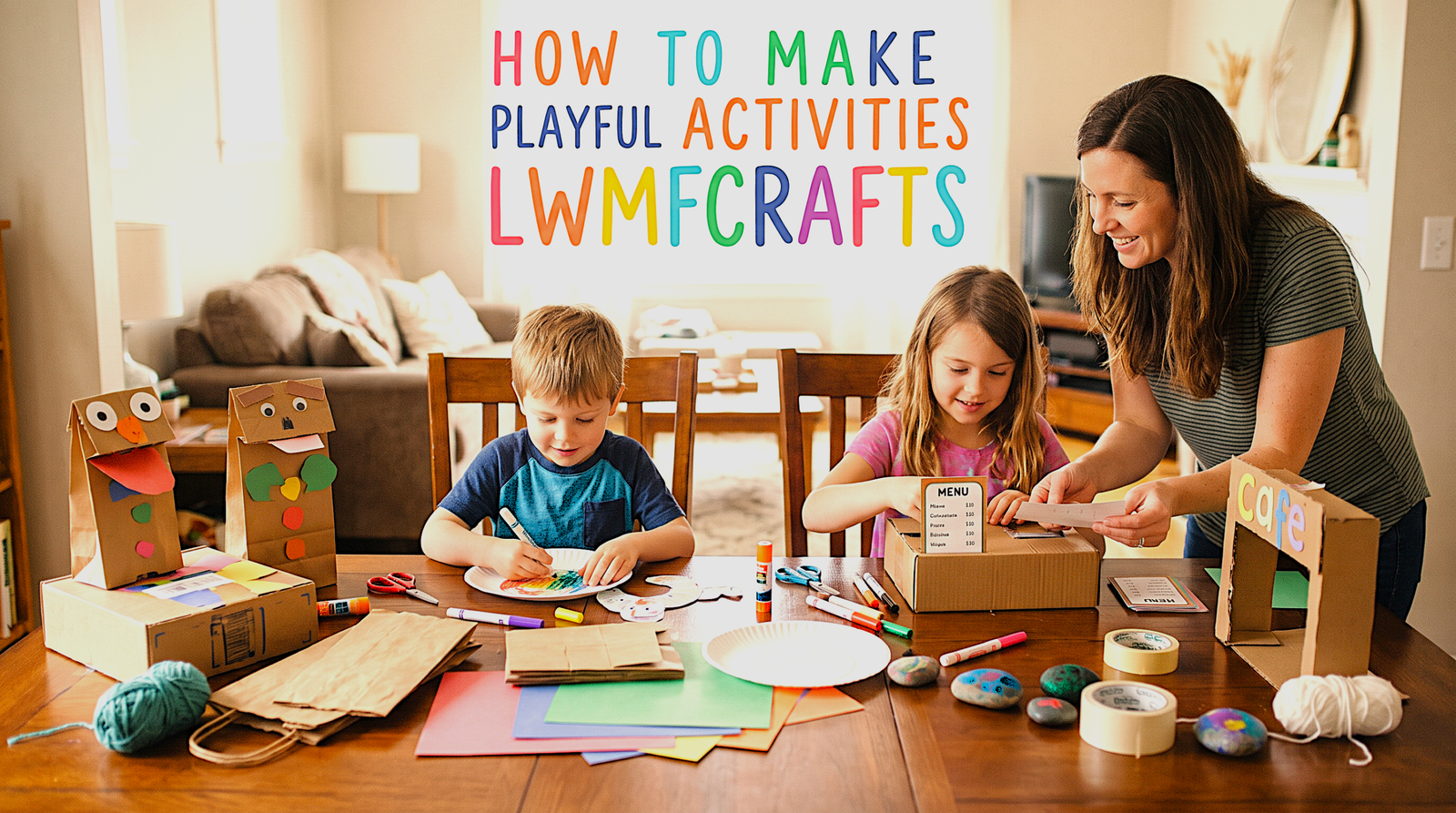
Paper plates are the easiest way in. Add ears, a beak or whiskers, and you have a lion, a frog or a duck ready for a story. Cardboard boxes go further: a castle, a spaceship, or a post office where parcels get labeled with silly addresses like “Pirate Post Office.”
A café is my favorite of these. Kids draw the menu, make order cards, and take turns being the cook, the customer and the grumpy critic.
Puppets and story props
Paper bag puppets and old sock puppets are quick to make and endless to use. Draw the eyes on instead of gluing buttons, which keeps small parts out of the picture. Then set up a box as the interview desk and let the puppets answer questions like “why are all the roads in your town purple?”
Story stones work the same way. Paint simple pictures on smooth stones, draw three from a bag, and invent a story that uses all of them. It’s a game you can play in the car.
Garden and nature crafts
This is where I send anyone who loves plants. Collect leaves, petals and twigs on a walk, then glue them into a collage at home. Skip anything you can’t identify, and leave protected areas alone.
Painted stones make cheerful plant markers once they’re sealed for outdoor use. Clean egg cartons work as small seed pots, and watering them each day turns the craft into a mini garden project with a real result.
Which Playful Activities Suit Which Age?
Age is a guide, not a rule. Two kids of the same age can want completely different things, so treat this table as a starting point.
| Age | Good picks | The adult’s job |
| Toddlers (1–3) | Tear-and-paste collage, big-format finger painting, taste-safe playdough | Stay close, keep every piece large |
| Preschoolers (3–5) | Paper plate faces, bag puppets, handprint animals | Supervise scissors, help with cutting |
| School-age (6–10) | Cardboard builds, marble runs from tubes, plastic jar decorating | Set up, then step back |
| Tweens and teens (11+) | Decorated notebooks, room décor, timed craft challenges | Supply materials, stay out of the way |
Mixed ages work too if everyone gets a role. One child draws, another builds, and the youngest decorates. Nobody has to do a job they dislike.
How Do You Keep Playful Crafts Safe and Low-Mess?
Both come down to a little thinking before the craft comes out. Thirty seconds of setup saves a lot of wiping and worrying.
Safety checks before you start
Run through these four questions every time:
- Small parts? Buttons, beads, pom-poms and googly eyes stay away from children under three, or get an adult watching closely.
- Sharp tools? Blunt-tip scissors and glue sticks for little ones, with hot glue and craft knives for adults only.
- Recycled materials? Check for staples, sharp edges and chemical residue, and skip anything that once held cleaners.
- Can I step away? If not, save the activity for a time when you can stay at the table.
Containing the mess
I treat the container as the boundary. A baking tray, a box lid or a shallow bin keeps paint, rice and dough in one place, and a flattened trash bag underneath covers the rest. On low-energy days, stickers, felt boards and dry-erase boards give you a craft with almost no cleanup.
Finish with a short reset: supplies back in the box, table wiped, and the unfinished castle parked on a shelf. A half-built castle isn’t clutter. It’s tomorrow’s activity, already set up.
Common Mistakes That Kill the Fun
The mistake I see most often is doing the craft for the child. The result looks better, but the child learns less and cares less. Let it look messy.
Close behind is picking a project for the photograph instead of the person. If the craft only works when it looks perfect, kids spot the pressure fast. The same goes for heavy instructions: give a clear starting point and add steps only when they’re needed.
Two quieter ones to watch for. Don’t turn every craft into a lesson, because making something for fun is a perfectly good reason. And don’t push to finish when everyone has already moved on, since a half-done idea with a happy kid beats a completed one with a grumpy kid.
Keeping Playful Activities Going Week After Week
Inventing a fresh activity every day wears everyone out. A loose weekly rhythm fixes that, and repeating favorites is allowed. Kids rarely get bored of a puppet show.
A simple version looks like this:
- Make day: a craft or cardboard build
- Move day: an obstacle course or balloon volleyball
- Quiet day: puzzles, reading or story time
- Pretend day: a fort, a café or a puppet show
- Free choice: the child picks a favorite from the week
That’s really all there is to how to make playful activities lwmfcrafts: pick a theme, use what you have, let the child steer, and give the finished craft a second life as play. Start with one box and twenty minutes this week, and see what comes out of it.
Frequently Asked Questions
What does LWMFCrafts mean?
LWMFCrafts is a label tied to LookWhatMomFound, a family blog about simple home activities. Other sites use it for easy, low-cost craft projects, and some expand the letters in their own ways, so there’s no single official meaning.
What supplies do I need for playful crafts?
Paper, cardstock, glue sticks, blunt-tip scissors, markers, tape, yarn and clean cardboard cover most projects. Check your recycling bin and junk drawer first, since you probably own most of it already.
What are safe playful activities for toddlers?
Think large and non-toxic: tear-and-paste collage, finger painting with washable paint, and taste-safe playdough. Skip anything small enough to swallow and stay close the whole time.
How do I keep crafts from taking over a small space?
Use a tray, box lid or shallow bin as the work area and put a flattened trash bag underneath. Keep a low-mess option on hand for rushed days, like stickers or a felt board.
Can older kids and adults enjoy these activities?
Yes. Older kids like timed challenges, notebook decorating and room décor, and adults often enjoy the same projects at their own pace. The playful part is about choice and imagination, not age.
What if my child only wants to decorate or loses interest halfway?
Let them decorate. An adult can handle the harder steps while the child makes the creative decisions. If interest fades, park the project and come back later, because nobody needs to finish on the first try.