I have not only been growing pepper on open fields, but also under confined buildings, and I know this much better than any other thing–few insects are as harmful and wicked as the pepper weevil. You do not necessarily observe it at early age. Damage is not always immediately evident. However, when it gets its root it can effortlessly steal away a big slice of your harvast.
This was once a local problem but it is increasingly becoming a global problem, particularly in green house systems where there are good conditions to accommodate high rates of pest proliferation.
An infestation of Pests Growing Out of Common Areas
As agricultural research forecasts, global trade and sheltering cultivation systems have led to the expansion of pepper weevil (Anthonomus eugenii) outside the traditional regions.
Although the greenhouses provide controlled conditions in growing crops, it also provides stable conditions favoured by pests existence and reproduction. Researchers note that this pest has already spread to temperate areas and is still threatening to the production system of greenhouse peppermers.
I can tell, and people I have spoken to in the growers, tell me–this has not been, after all, a local issue. It is emerging as a regular menace.
The Reason Greenhouses Complicate the Problem
Open fields have weather changes that may slow down the growth of pests. Temperatures and humidity in greenhouses are fairly constant though.
This enables pepper weevils to multiply incessantly all through the crop cycle. Research indicates that the infestations may occur at any phase- either during the early plant, or fruit development- making it even more challenging to control them.
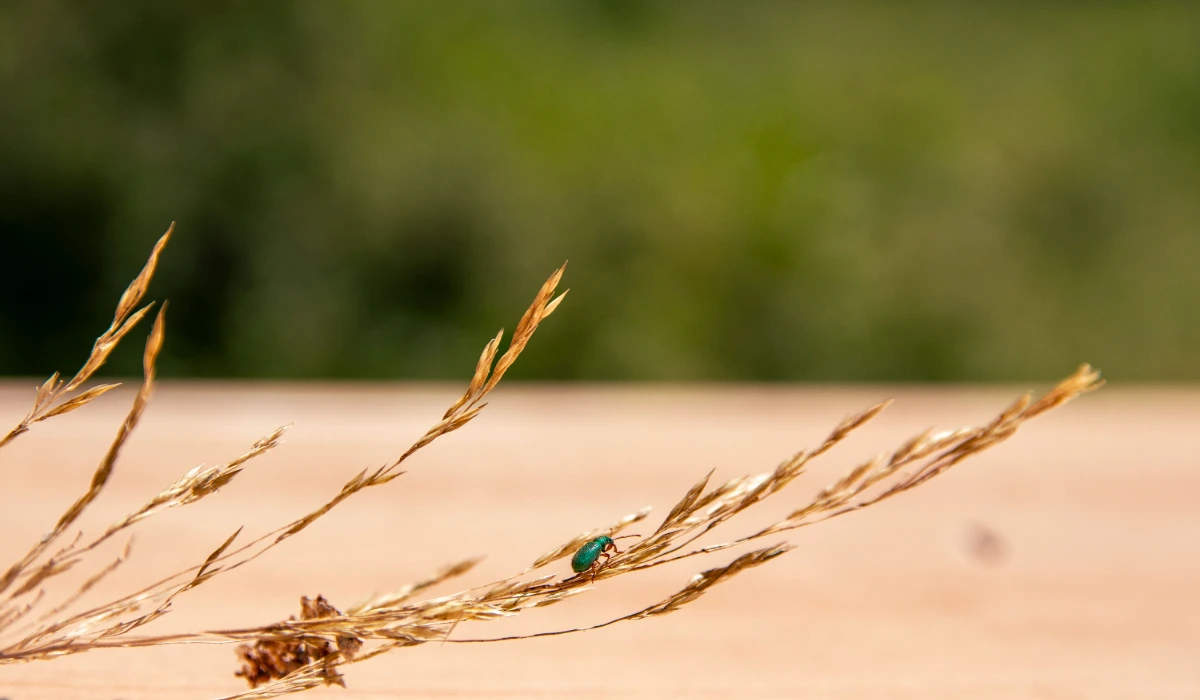
Detection is another challenge. The adults are minute and can go unnoticed, whereas larvae mature within buds and fruits, being unseen.
The infestation is advanced by the time the symptoms are felt in the form of drop or damaged buds and prematures fruit fall.
Early Signs Recognition
Throughout the years, I came to know how to pay attention to minor signs before the harm is done.
Unexplained bud drop is one of the earliest indications. The blossoms can dry up and wither away. Buds or young fruits may have small puncture marks, which may signal egg-laying.
Fruits can have deformed or early falls as the larvae develop internally. In extreme cases, large areas of the crop may be impacted.
Researchers add that early identification is very important since even one adult weevil can instigate remedial action in the greenhouse systems owing to such high rate of reproduction.
Conventional Weevil Control Insecticide Methods
Similar to numerous growers, I started using the option of chemical weevil control insecticides. They also have the ability of attacking adult weevils but in most cases the ones that are underneath plant tissues are not attacked.
It has another issue. Research has shown that the frequent application of insecticides may affect the beneficial insects utilized in the control of pests in green houses and thus this may complicate the process of integrated control.
As I progressed, I came to the realisation that the use of chemicals alone is not only not efficient- but unsustainable.
Good Cultural Practices
I never fail to go back to basics before searching at more sophisticated solutions.
Strict sanitation is a must. The clearance of the infested fruits and plant debris decreases breeding areas. Trap surveillance helps in early detection.
Some of the practices suggested both by growers and researchers include crop hygiene, controlled entry points, and regular scouting.
The steps do not kill the pest-but will greatly lessen its propagation.
Metarhizium Anisopliae: Biological Perspective
Over the last years there has been a growing interest amongst microbial experts at agricultural universities in biological alternatives. Metarhizium anisopliae powder is one such product which is a naturally occurring soil fungus.
This creature operates in a different manner compared to traditional chemicals. Rather than being a contact poison it infects insects biologically. The spores attach to the body of the insect and invade the insect, and develop within the insects body eventually killing the pest.
It has been proposed that microbial insecticides such as metarhizium anisopliae may help in pepper weevil suppression although the effect might be slower than chemical treatment.
It is not a disadvantage to a grower to take action more slowly it is a longer-term control measure.
MET Zone: Use of Biological Control in Practice
To render biological control feasible, other products such as MET Zone have been created which delivers metarhizum anisopliae directly into crop environment.
When used in my own case, I would apply the MET Zone weevil control insecticides around the root zone and the soil to target pest lifecycle stages that would be either close or below the plant. Although pepper weevils are not exactly soil pests, the decrease in total insect pressure in the growing environment contributes to all-purpose weevil pest control.
Microbial professionals tend to remind people that biological tools are most effective at a preventive, rather than reactive, mode.
Uniting Experience with Science
The thing that impresses me most after the years of maturity is the level of appropriateness of experience to scientific research.
Pest control experts recommend interdisciplinary approach to weevil pest control i.e. a combination of surveillance, cultural practices and biological. This method provides a balanced environment in which pests find it hard to control.
Such strategies are particularly advantageous in greenhouse systems since the biological solutions can be applied under control and in a consistent, regular manner.
An Emerging Risk, But Controllable
Therefore, is pepper weevil becoming a menace in greenhouse pepper farming? The answer is yes.
Its invasion into new areas, capability of reproducing profusely in controlled set-ups, and the resistance obstacle renders it a great concern.
And it is not uncontrollable.
Final Thought
My experience as a grower, and from the information provided by researchers, is simple clear: early detection and combined control help to achieve success.
A combination of good cultural habits and biological agents such as metarhizium anisopliae powder and MET Zone solutions, growers can create a more resilient system.
Since in greenhouse farming, we do not simply respond to pests but to ensure a step ahead of them.