Windows play an important role in the comfort, appearance, security, and energy performance of a home. However, like most parts of a property, aging windows gradually show signs of wear. Frames can deteriorate, seals can fail, hardware may stop working properly, and glass can become damaged. When these problems appear, homeowners often face an important question: should the windows be repaired or completely replaced?
The right decision depends on the age of the windows, the type of damage, their overall condition, and how well they continue to perform.
Start With the Condition of the Window
Aging does not automatically mean that a window needs replacement. Some older windows remain structurally sound and simply develop isolated problems over time. A broken lock, worn weatherstripping, damaged screen, or minor operational issue may be relatively straightforward to address.
Homeowners should look at the entire window rather than focusing only on its age. Check whether the frame is stable, whether the window opens and closes correctly, and whether there are signs of moisture or significant deterioration. A window that remains structurally strong may still have years of useful service after appropriate repairs.
When Repair May Be the Practical Choice
Repair can make sense when the problem affects only one component and the rest of the window remains in good condition. For example, hardware issues can sometimes make a perfectly usable window difficult to operate. Similarly, localized seal, glass, or frame problems do not necessarily justify replacing the complete unit.
For homeowners considering window repair in Palatine IL, local weather conditions are also worth considering. Palatine experiences cold winters, warm summers, rain, snow, and seasonal temperature changes. These conditions can put repeated stress on window seals, frames, and moving components. Addressing smaller problems promptly may help prevent moisture intrusion and further deterioration.
Repair can also be appealing when homeowners want to preserve the existing appearance of their property, particularly when older windows complement the architectural character of the house.
Signs Replacement May Be Worth Considering
There comes a point when repeated repairs may no longer provide good long-term value. If several components are failing at the same time, replacing the window may offer a more practical solution.
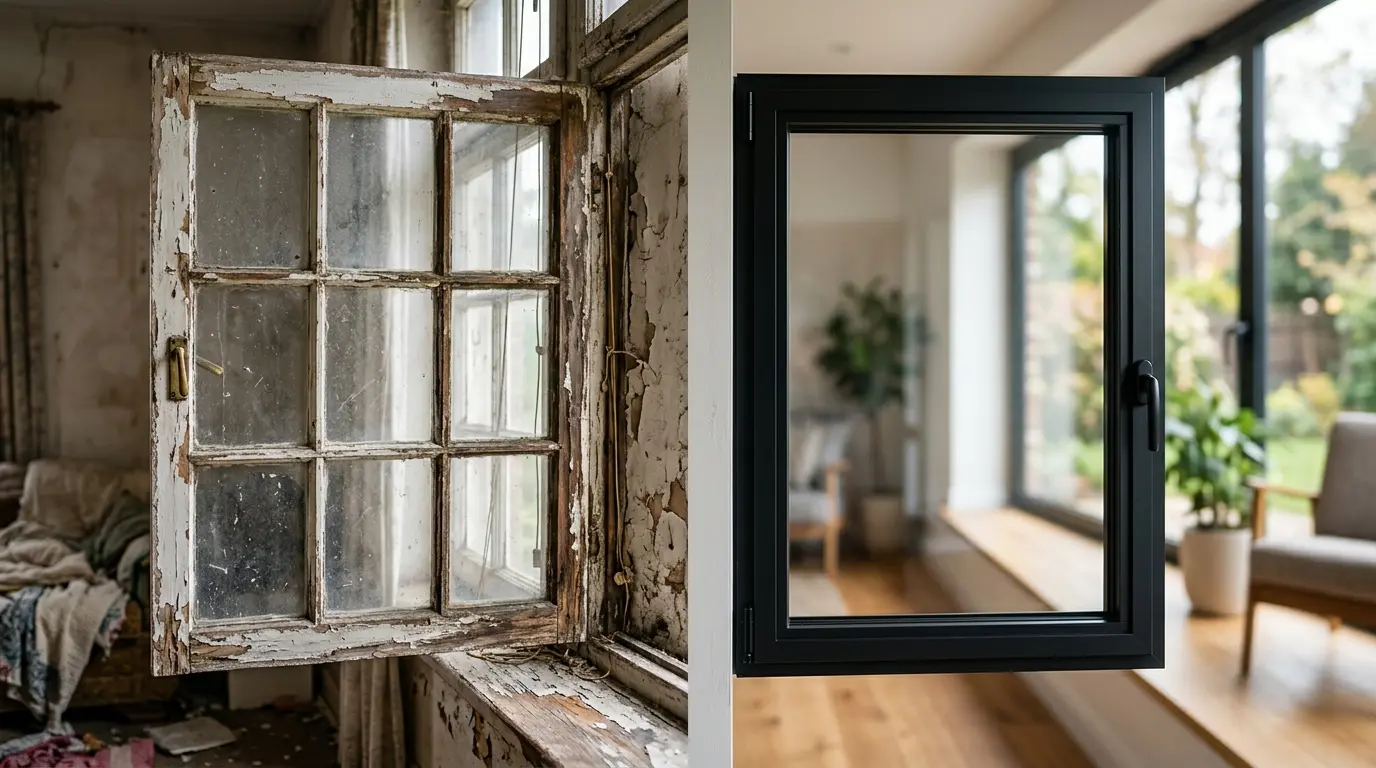
Extensive frame deterioration is one warning sign. Rot, significant warping, or serious structural damage can affect the window’s ability to perform properly. Persistent drafts may also indicate broader problems that cannot be solved through a simple adjustment or minor repair.
Homeowners may notice condensation or fogging between panes in insulated glass. This can indicate that the seal has failed. While some glass-related problems may be repairable, widespread seal failure across numerous aging windows can make replacement worth evaluating.
Consider Energy Performance
Older windows can contribute to unwanted heat transfer, especially if seals have deteriorated or gaps have developed around the frame. During a Palatine winter, poorly performing windows can allow heated indoor air to escape. During warmer months, they can make it harder to maintain comfortable indoor temperatures.
Before assuming replacement is necessary, however, identify the actual source of the problem. Drafts can sometimes result from worn weatherstripping, damaged seals, or small gaps that can be corrected without installing an entirely new window.
If the windows are extremely old, consistently uncomfortable, and inefficient throughout the home, modern replacements may offer greater long-term benefits.
Think About the Number of Problem Windows
One damaged window presents a different decision from a house where nearly every window is experiencing problems. When only one or two units require attention, targeted repairs can often be more economical and less disruptive.
When multiple windows show similar signs of deterioration, homeowners should compare the cumulative cost of ongoing repairs with the cost and expected benefits of replacement. This broader view can help avoid repeatedly spending money on windows that are approaching the end of their practical lifespan.
Look Beyond the Immediate Cost
The least expensive option today is not always the least expensive option over several years. A successful repair that extends a window’s service life can provide excellent value. On the other hand, repeatedly fixing a severely deteriorated window can eventually cost more without resolving underlying performance issues.
Homeowners should consider condition, expected lifespan, energy performance, maintenance needs, and future renovation plans together.
Making a Confident Decision
There is no universal rule for deciding between window repair and replacement. Minor, isolated problems often make repair a sensible first option, while extensive deterioration, recurring failures, and poor overall performance may point toward replacement.
A careful inspection can clarify what is actually wrong and whether the issue affects one component or the entire window system. By evaluating each window based on its real condition rather than age alone, homeowners can make a practical decision that supports comfort, efficiency, and the long-term condition of their property.