ADU Builders Bay Area is adopting sustainable building materials and methods across its accessory dwelling unit construction projects in the Bay Area. Sustainable construction integrates material selection, energy efficiency, water conservation, indoor air quality, and durability into a coordinated approach. The result is ADUs that perform well environmentally, deliver strong long term operating economics, and support the health and comfort of their occupants.
The Bay Area’s environmentally conscious culture, combined with California’s evolving building codes and incentive programs, makes sustainable ADU construction increasingly mainstream. The company integrates sustainability throughout design, specification, and construction rather than treating it as a premium add on.
Why Sustainable Materials Matter in ADU Construction
Material choices in residential construction affect environmental impact at every stage. Extraction, manufacturing, transportation, installation, occupancy, and eventual disposal or recycling all contribute to a material’s footprint. Sustainable material selection considers these stages and prioritizes choices that reduce environmental impact while maintaining or improving performance.
Sustainable materials also affect indoor air quality. Low emitting finishes, formaldehyde free sheathing, and natural fiber insulation contribute to healthier interior environments. Occupants of ADUs built with attention to material health benefit from cleaner air across years of occupancy. The company specifies materials with both environmental and health considerations in mind.
Under California’s mandatory Green Building Standards Code (CALGreen), residential envelope construction must comply with strict off-gassing thresholds. Using adhesives, caulks, subfloor sealants, and zero-VOC interior paints certified by standards like Green Seal or South Coast Air Quality Management District (SCAQMD) Rule 1113 is not just an eco-conscious preference—it directly prevents toxic off-gassing in tightly sealed, small-footprint spaces where air volume is lower than in standard detached homes.
Structural Materials
Wood framing remains the dominant structural approach for residential ADU construction. The company specifies wood from sources that support sustainable forestry where available. Certified wood, reclaimed wood, and engineered wood products that use smaller diameter timber efficiently all contribute to sustainable structural choices.
Engineered wood products including I joists, glued laminated timber, and laminated veneer lumber use wood more efficiently than dimensional lumber alone. Their strength to weight ratios support efficient framing. Their consistency reduces waste during construction. These products often deliver better structural performance than equivalent dimensional lumber while using fewer trees.
Sustainability at the structural phase also involves reducing unnecessary timber. By employing Optimum Value Engineering (OVE) or advanced framing—such as spacing 2×6 studs at 24 inches on-center instead of traditional 16 inches, utilizing two-stud corner clips, and right-sizing window headers—builders cut down total lumber usage by up to 20%. Crucially, this creates wider cavity spaces for continuous thermal insulation, substantially reducing the energy loss caused by thermal bridging through solid wood studs.
Insulation Selection
Insulation selection affects both energy performance and material sustainability. Several insulation options serve sustainable construction well. Cellulose insulation made from recycled paper delivers strong thermal performance with low embodied energy. Mineral wool offers fire resistance and acoustic performance with stable thermal properties. Cotton insulation made from recycled denim provides natural fiber insulation. While traditional closed-cell spray foams carry high global warming potential (GWP), modern hydrofluoroolefin (HFO) blowing agents and dense-pack cellulose provide air-impermeable sealing without the severe carbon penalties of legacy chemical formulations.
The company specifies insulation based on the specific assembly, climate considerations, and homeowner preferences. Mixed approaches that use different insulation types in different parts of the envelope often deliver the best combined performance.
Exterior Materials and Cladding
Exterior materials must perform across decades of weather exposure. Sustainable exterior choices include fiber cement siding made with substantial recycled content, reclaimed wood siding from salvage sources, certified new wood siding from sustainably managed forests, and metal siding with strong recycling potential at end of life.
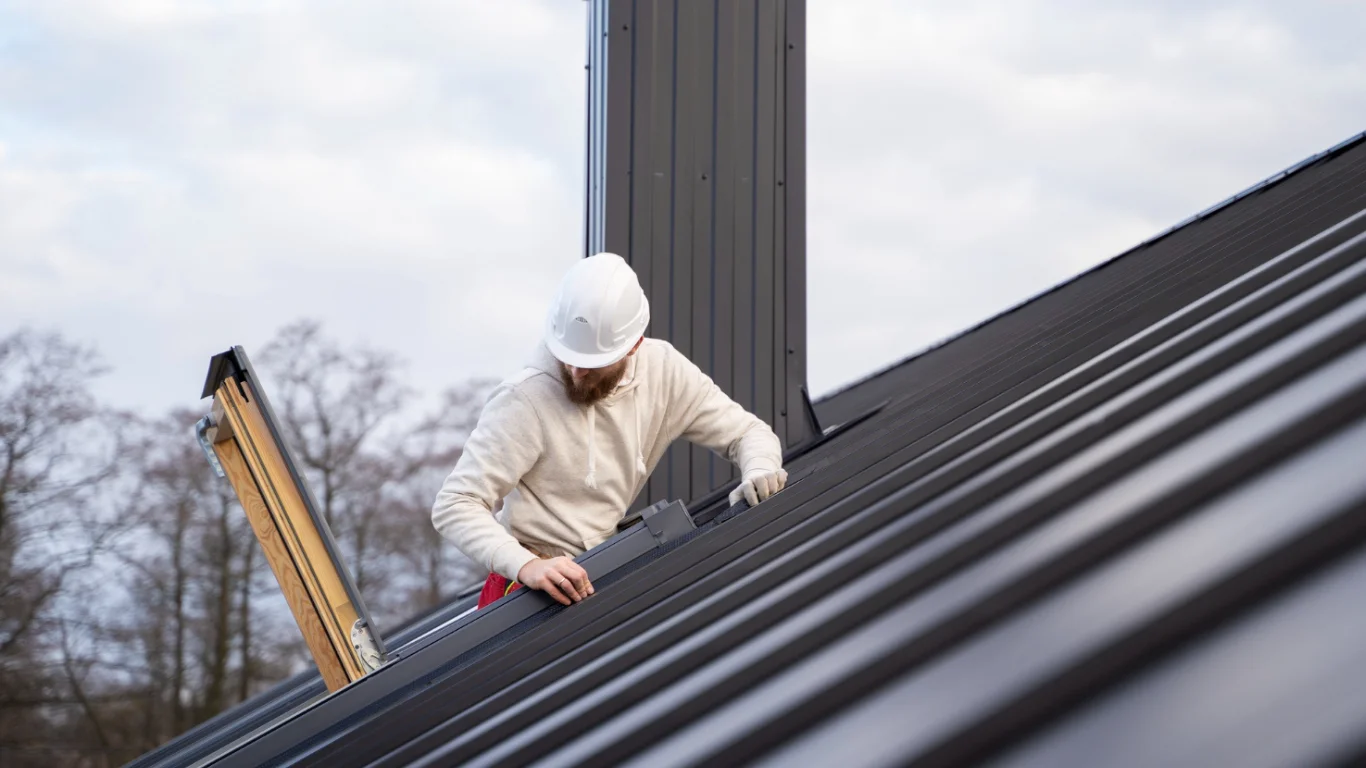
Roofing materials affect both sustainability and energy performance. Metal roofing offers long life, recyclability, and good performance with cool roof finishes. Architectural composite shingles with cool roof certifications reflect more solar energy than standard shingles. Tile and slate roofing offer very long life with appropriate maintenance. The company selects roofing based on the homeowner’s preferences, the architectural design, and long term performance goals.
Many Bay Area hillside neighborhoods—including sectors of Oakland, San Jose’s Almaden Valley, and Marin County—fall into designated Wildland-Urban Interface (WUI) zones. Sustainable cladding choices must satisfy California Building Code Chapter 7A fire-hardening standards. Fiber cement and standing-seam metal assemblies excel by providing Class-A non-combustible exterior envelopes. Paired with cool-roof coatings boasting a high Solar Reflectance Index (SRI ≥ 64 for low-slope roofs), these materials reject ambient solar radiation while resisting wind-blown embers during wildfire events.
Window Selection
Windows are critical to both sustainability and energy performance. Triple pane glazing, low emissivity coatings, and high performance frames all contribute. Window frames made from sustainably sourced wood, fiberglass with recycled content, or aluminum with strong recycling potential all support sustainable construction.
Glazing selection balances solar heat gain control, daylight transmission, and thermal performance. South facing windows in Bay Area applications often benefit from moderate solar heat gain in winter and effective shading or low solar heat gain glazing for summer comfort. Across Bay Area homeowners pursuing sustainable ADU construction, ADU Builders Bay Area integrates window selection with overall energy and sustainability planning so individual choices support the project’s broader goals.
All-Electric Heat Pumps and Decarbonized Water Heating
Building an eco-friendly envelope demands equally sustainable mechanical infrastructure. With most Bay Area jurisdictions enforcing building electrification reaches:
- Mini-Split Inverter Heat Pumps: Variable-refrigerant ductless heat pumps deliver ultra-high seasonal efficiency (up to 20+ SEER2), heating and cooling living zones independently while drawing minimal electrical load.
- Heat Pump Water Heaters (HPWH): Modern hybrid electric water heaters consume up to 70% less electricity than legacy gas or resistance tank heaters by extracting ambient warmth from surrounding air to heat domestic water.
- Solar and Battery Pre-Wiring: Sizing main breaker panels and routing pre-plumbed solar conduits during rough framing enables seamless rooftop photovoltaic (PV) integration, aligning with California’s net-zero operational energy goals.
Long Term Performance and Value
Sustainably constructed ADUs deliver strong long term performance through lower operating costs, healthier interior environments, and durable materials that hold up across decades. These benefits support both occupant quality of life and property value over time.
About ADU Builders Bay Area
ADU Builders Bay Area is a Bay Area residential construction company specializing in sustainable accessory dwelling units, junior ADUs, garage conversions, detached ADUs, and related residential construction services. Based in San Jose and serving homeowners across the Bay Area, the company focuses on material sustainability, energy efficiency, indoor air quality, and durable construction.