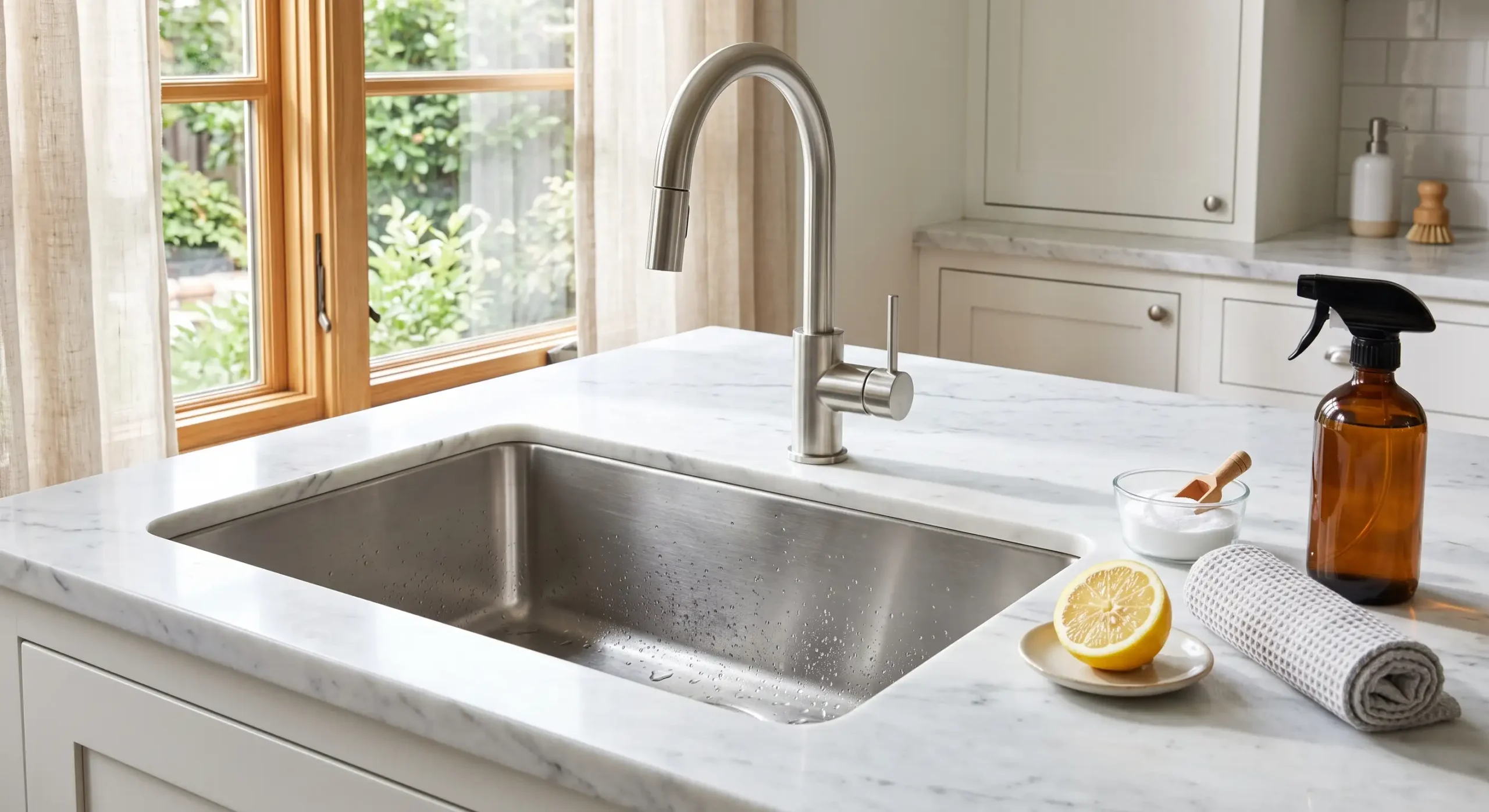
Stainless steel basins remain the undisputed centerpiece of the culinary workspace. They are heat-resistant, shatterproof, and built to survive daily family meal prep. Yet despite their durability, they are not self-cleaning. Over time, evaporation lines, greasy splatters, detergent films, and tap minerals turn a pristine metallic basin cloudy and blotchy.
Mastering how to clean stainless steel kitchen sink setups requires understanding the material itself: stainless steel relies on a microscopic chromium-oxide passive layer to resist corrosion. Harsh scouring pads and bleach strip this protective film, while the right non-abrasive techniques preserve it indefinitely.
What Is the Best Cleaner for Stainless Steel Sinks?
Before grabbing random bottles from beneath your counter, evaluate your basin’s current level of buildup.
Homeowners frequently ask: what is the best cleaner for stainless steel sinks? For daily maintenance, standard liquid dish detergent formulated with degreasers combined with hot water is ideal. For stubborn film or periodic revitalization, oxalic-acid-based powdered cleaners (such as Bar Keepers Friend) rank among the most effective commercial choices because they lift oxidation and mineral stains without scratching.
Avoid chlorine bleach, ammonia mixtures, and hydrochloric acid drain openers. These chemicals attack the protective chromium layer, causing irreversible surface clouding or dark pitting.
Everyday Care vs. Deep Restoration
Preventing stubborn residue takes far less effort than removing months of built-up scale.
| Frequency | Target Issues | Recommended Approach |
| Daily | Food residue, grease slicks, soap scum | Warm water rinse, mild dish soap, soft microfiber wipe |
| Weekly | Water spotting, dullness, mild limescale | Baking soda rub down, hot rinse, microfiber buffing |
| Monthly / Deep | Stubborn brown spots, cloudy scale, dirty grates | Vinegar wrap, oxalic powder scrub, mineral oil polish |
When neglect sets in, learning how to deep clean stainless steel kitchen sink interiors requires a systematic method:
- Clear the basin completely and rinse away loose debris with hot water.
- Apply a mild abrasive paste in the direction of the metal’s grain lines.
- Clean tight seams, the faucet deck, and the rim with a soft nylon detail brush.
- Rinse thoroughly and towel-dry immediately to prevent new water spots.
Natural Pantry Cleaning Solutions
You do not need expensive specialty products to restore your basin. Everyday household items handle routine grime effectively.
The Baking Soda Method
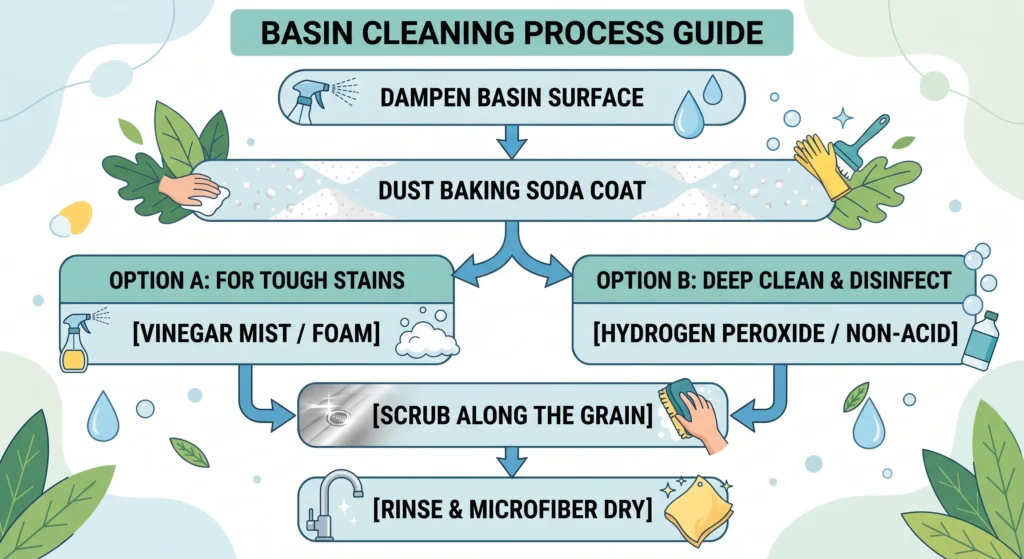
Sodium bicarbonate provides just enough mechanical traction to lift stuck grease without scoring the metal. If you want to know how to clean stainless steel kitchen sink with baking soda, start by dampening the surface with warm water. Dust the basin generously with baking soda, let it sit for two minutes, and scrub gently using a sponge moving strictly with the brushed grain.
The White Vinegar Technique
Distilled white vinegar contains roughly 5% acetic acid, which cuts through chalky alkaline deposits. If you are learning how to clean stainless steel kitchen sink with vinegar, spray undiluted white vinegar across the basin walls, let it sit for three to four minutes to soften mineral haze, wipe with a soft cloth, and rinse cleanly.
Combining Both Ingredients
For heavy grease and baked-on food films, harness chemical effervescence. To see how to clean a stainless steel sink with baking soda and vinegar, coat the basin in baking soda first, then spritz white vinegar over the powder. The effervescent carbon dioxide reaction lifts crusted food particles from microscopic surface grooves. After five minutes, scrub lightly and flush with water.
Blending Vinegar with Household Additives
Many people explore how to clean stainless steel kitchen sink with vinegar and dish soap. Combining two parts vinegar with one part liquid dish soap creates a thick, clinging solution that stays in contact with vertical sink walls long enough to cut stubborn cooking oil films.
Vinegar-Free Alternatives
If your kitchen features natural marble, limestone, or granite countertops that etch upon contact with acids, you need to understand how to clean stainless steel kitchen sink without vinegar. In this case, mix 3% hydrogen peroxide with baking soda or cream of tartar to form a spreadable paste. It provides excellent stain-lifting, sanitizing power without introducing acidic risks to delicate stone surrounds.
Removing Stubborn Stains and Hard Water Scale
Discoloration often looks like rust, but it is usually caused by minerals in municipal water supplies or iron particles from wet cast-iron cookware.
Understanding how to clean stainless steel kitchen sink stains begins with pinpointing the stain type:
- Heat tints / rainbow discoloration: Caused by mineral overheating; dissolved quickly by vinegar or lemon juice.
- Rust marks: Caused by sitting metal cans or steel wool fibers left behind; lift these with an oxalic-acid paste scrubbed with the metal grain.
If you live in an area with hard municipal water, what is the best way to clean a stainless steel sink to remove hard water deposits?
Saturate cotton cloths or paper towels with warm distilled vinegar and place them directly over the cloudy scale or around the faucet base. Allow them to rest for 25 to 30 minutes. The acid breaks the bonds of the calcium carbonate deposits. Once lifted, scrub gently with a soft nylon brush, rinse, and hand-dry.
Reviving an Aged Basin
Decades-old fixtures often look cloudy from millions of micro-scratches. Knowing how to clean an old stainless steel kitchen sink involves a finishing polish.
Once clean and dry, apply three drops of food-grade mineral oil to a dry microfiber cloth. Work the oil thoroughly across the metal following the brushed grain. The oil fills microscopic crevices, evens out light refraction, restores a satin glow, and creates a hydrophobic barrier that repels water droplets for days.
Cleaning Basin Accessories, Drains, and Plumbing
A spotless basin looks incomplete if the surrounding hardware and drainage lines remain coated in grime.
Sink Grates and Protection Racks
Bottom grids protect sinks from heavy pots, but their intersecting welds collect grease, food bits, and black slime.
- Grates: When learning how to clean stainless steel kitchen sink grate units, place the grate flat in a utility basin, soak in hot soapy water mixed with washing soda, and clean the wire joints with a stiff detail brush.
- Racks: For dish-drying accessories, knowing how to clean stainless steel kitchen sink rack frames means removing any silicone or rubber bumpers where mold colonies gather, soaking them in mild soapy water, and drying them completely before reassembly.
Basin Drains and Pipe Maintenance
Drain openings collect decaying organic matter, leading to sour kitchen odors and fruit flies.
- Drain Collars: Mastering how to clean stainless steel kitchen sink drain assemblies requires scrubbing under the black splash guard baffles with an old toothbrush dipped in dish soap and baking soda.
- Drainpipe Clearing: When wastewater starts draining slowly, address how to clean kitchen sink pipe blockage issues immediately. Start by plunging the basin opening with a cup plunger to dislodge physical plugs. If water remains slow, remove and clear the plumbing P-trap beneath the sink. Avoid caustic lye-based chemicals that generate heat and damage pipe seals or splash back onto stainless steel.
Caring for Non-Stainless Kitchen Basins
Not every sink in a home uses chromium-nickel steel. Understanding how to clean kitchen sink not stainless steel installations protects different surfaces:
- Fireclay and Porcelain: Susceptible to metal-pot marking; clean with mild liquid cream cleansers, never acidic soaks.
- Granite Composite: Susceptible to bleaching and acid-etching; clean using neutral pH dish detergents and treat periodically with composite sink mineral oil.
- Copper: Natural living finish that reacts immediately to acids; use plain water and gentle soap, avoiding vinegar completely unless a bright raw penny finish is desired.
Conclusion
Knowing how to clean stainless steel kitchen sink fixtures comes down to consistency, using non-abrasive cleaners, and wiping with the direction of the metal’s brushed grain. A simple 60-second nightly routine of washing out food remnants and drying the basin with a microfiber cloth eliminates 90% of mineral buildup, keeping your sink looking brand-new for decades.
Frequently Asked Questions
Can I use bleach to clean a stainless steel sink?
No. Bleach contains chlorine, which breaks down the passive chromium-oxide layer protecting stainless steel from oxidation, causing dull grey spots and permanent micro-pitting.
Why does my stainless steel sink have rust spots?
Stainless steel rarely rusts on its own. Rust spots almost always stem from external iron residue—such as wet cast-iron pans, food tins, or tiny steel wool fragments—that oxidized while sitting in the damp basin.
How do I prevent water spots on my sink?
Water spots occur when mineral-rich tap water evaporates on the metal. The simplest preventative measure is keeping a microfiber towel beside the sink and wiping the basin dry after evening dishwashing.