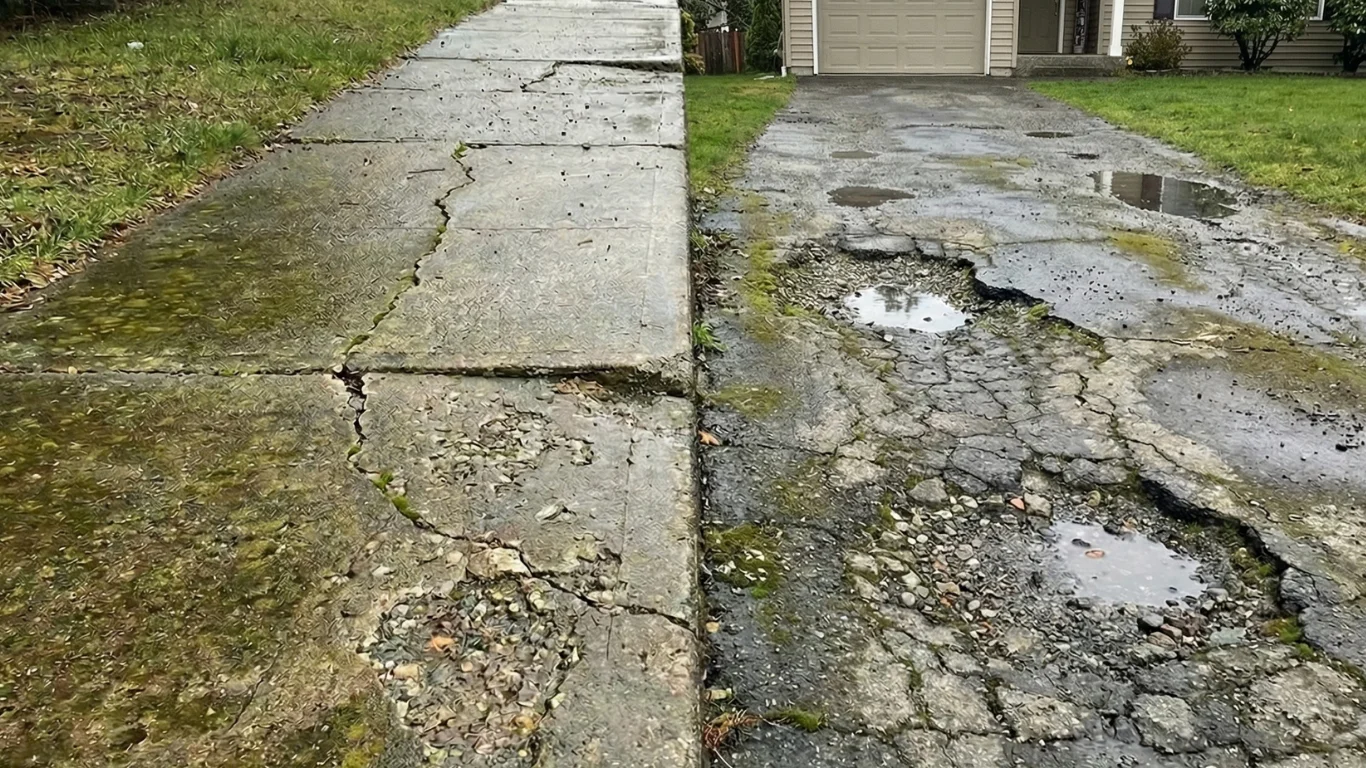
People think damage comes from one bad storm or one harsh winter. That is rarely how it happens. What usually breaks a driveway, patio, or walkway is months of normal weather stacking up. Rain that never fully dries. Heat that keeps expanding the surface. Cold nights that freeze whatever moisture got trapped earlier.
You do not notice it at first. That is the problem.
Water Does More Damage Than People Admit
Water is not dramatic, but it is persistent. It gets into places it should not be. Small cracks. Slight gaps in mortar. Edges where concrete meets soil.
Once it gets below the surface, it starts changing. Soil softens. Base layers lose strength. Things shift just enough that you start seeing cracks or uneven spots later on.
A lot of driveways fail this way. Not because the concrete was bad, but because water had nowhere to go. Poor drainage almost always shows up eventually. Contractors who have been around long enough know this.
That is why companies like G&L Paving and Masonry spend more time on base prep and slope than most homeowners expect. They have already seen what happens when that part gets rushed.
Cold Weather Makes Small Problems Bigger
Freezing temperatures turn small flaws into larger ones. Water freezes. Ice expands. Pressure builds inside the material. Then it thaws. The crack stays wider than it was before.
This repeats every winter. It does not matter if the surface looks fine in summer. The damage is already there. It is just waiting for the next cold cycle.
People often assume concrete or stone is solid all the way through. It is not. It breathes. Once moisture gets inside, freezing weather will find it.
Heat Causes a Different Kind of Breakdown
Hot weather is slower, but it wears things down just as effectively. Sun exposure dries out surfaces and weakens sealants. Materials expand during the day and pull back at night.
Over time, this movement creates stress. Fine cracks form. Color fades unevenly. Asphalt gets soft and starts holding impressions.
These are usually written off as cosmetic issues, but they are early warning signs. When the surface protection starts failing, deeper wear follows.
Storms and Landscaping Add Extra Pressure
Heavy storms can undo years of stability in a single season. Soil washes away. Water pools where it never did before. Foundations get exposed without anyone noticing right away.
Landscaping choices make a difference, too. Tree roots do not break surfaces overnight. They push slowly. Month by month. Year by year. Eventually, patios lift, or walkways buckle.
Drainage problems make all of this worse. That is why landscaping and hardscaping cannot be treated as separate things.
Companies such as Garci’s Tree Service & Landscaping deal with this overlap regularly by managing root growth and water flow before it becomes a structural problem.
What Actually Helps Outdoor Structures Last
There is no shortcut here. Good installation matters more than any surface finish. The solid base, right slope, and clear drainage do most of the work.
Maintenance is necessary, but it is secondary. Sealing helps. Cleaning helps. Small repairs help. None of it works if the foundation underneath is already compromised. Ignoring early damage is what turns small fixes into expensive replacements.
Why Experience Shows Up Years Later
Weather damage exposes mistakes slowly. Poor grading does not fail right away. Cheap materials might look fine for a while. Inexperienced installation holds together until it does not. A wise Paving contractor in Norwalk, CT who understands climate build for what will happen later, not just what looks good at the end of the job. That difference shows up after a few seasons.
Conclusion
Outdoor structures do not fail randomly. The weather works on them every day. Quietly. Consistently. The surfaces that last are not lucky. They were built with water, heat, and cold in mind from the start. Good work shows up years later when everything is still holding together.
Frequently Asked Questions
1. How often should outdoor surfaces be checked?
At least once a year. Twice if winters are harsh or drainage is questionable.
2. Does sealing actually help, or is it optional?
It helps slow damage, especially from moisture and temperature changes. It does not replace proper installation.
3. Can landscaping really damage paving?
Yes. Roots, erosion, and water flow issues cause long-term structural problems if ignored.