If you want to learn how to hang a birdhouse, start by choosing a safe location that provides birds with shelter, suitable surroundings, and protection from predators. The right height, direction, and mounting method can make a significant difference in whether birds use the house. A birdhouse should also be placed where you can inspect and clean it without too much difficulty. With a few basic tools and some careful planning, you can create a useful nesting spot in your yard.
Choose the Right Location
The first step in learning how to hang a birdhouse is selecting an appropriate location in your yard or garden. Look for an area that is relatively quiet and offers birds some protection from heavy foot traffic and household activity. Depending on the bird species, a location near trees, shrubs, or open ground may provide useful access to food and cover. Avoid placing the house where branches, fences, or other structures make it easy for predators to reach the entrance.
Birdhouse Placement & Height Finder
Select a bird species below to get expert-recommended mounting height, entrance size, habitat, and placement tips.
1. Pick the Right Height
Birdhouse height depends on the species you hope to attract, so there isn't one universal mounting height for every birdhouse. Many common backyard birdhouses are installed several feet above the ground, while some species prefer houses placed considerably higher. Check recommendations for the specific bird species common in your area before deciding where to mount the house. If you're researching how to hang a birdhouse for a particular species, habitat and nesting preferences should guide your placement.
2. Face the Entrance Carefully
The direction of the birdhouse entrance can affect how comfortable and protected the nesting birds are. In many locations, positioning the entrance away from prevailing winds can help protect the interior from rain and strong drafts. Avoid placing the opening where it receives intense afternoon sunlight for long periods, especially in hot climates. A partially sheltered position can help keep the inside of the house from becoming excessively hot.
3. Choose a Stable Mounting Surface
A birdhouse should be securely attached so it doesn't swing excessively or fall during windy weather. You can mount a birdhouse on a wooden post, metal pole, fence post, tree, or another suitable structure depending on the design. When attaching it to a post, make sure the post is firmly installed in the ground and can support the weight of the house. A stable mounting surface is an important part of how to hang a birdhouse because birds are more likely to use a structure that remains secure.
4. Protect the Birdhouse From Predators
Predator protection should be considered before you install the house rather than after birds begin nesting. Cats, raccoons, squirrels, snakes, and other animals may attempt to reach eggs or young birds. Avoid placing the birdhouse close to structures that predators can easily climb or use as launching points. Depending on the location, a predator guard on a pole can provide additional protection around the nesting area.
5. Keep the Entrance Clear
Make sure the entrance hole has a clear flight path so birds can easily enter and leave the house. Avoid placing dense branches directly in front of the opening or positioning the house where nearby objects block access. Some species prefer more open approaches, while others may use houses located near vegetation. Keeping the entrance unobstructed is another practical consideration when learning how to hang a birdhouse successfully.
6. Make Cleaning Accessible
A good birdhouse location should allow you to inspect and clean it when appropriate. Many birdhouses are designed with a removable roof or side panel that makes cleaning easier after the nesting season. Regular maintenance can help remove old nesting material and reduce the buildup of parasites or moisture. Don't disturb active nests, eggs, or young birds simply for routine cleaning.
7. Check the Birdhouse After Installation
Once the birdhouse is installed, check that all screws, mounting brackets, and connections are secure. Look at the house after strong winds or severe weather to make sure it hasn't shifted, tilted, or become damaged. Make sure the entrance remains unobstructed and that water isn't collecting inside. These simple checks can help you maintain a safe nesting structure throughout the season.
Can You Hang a Birdhouse From a Tree?
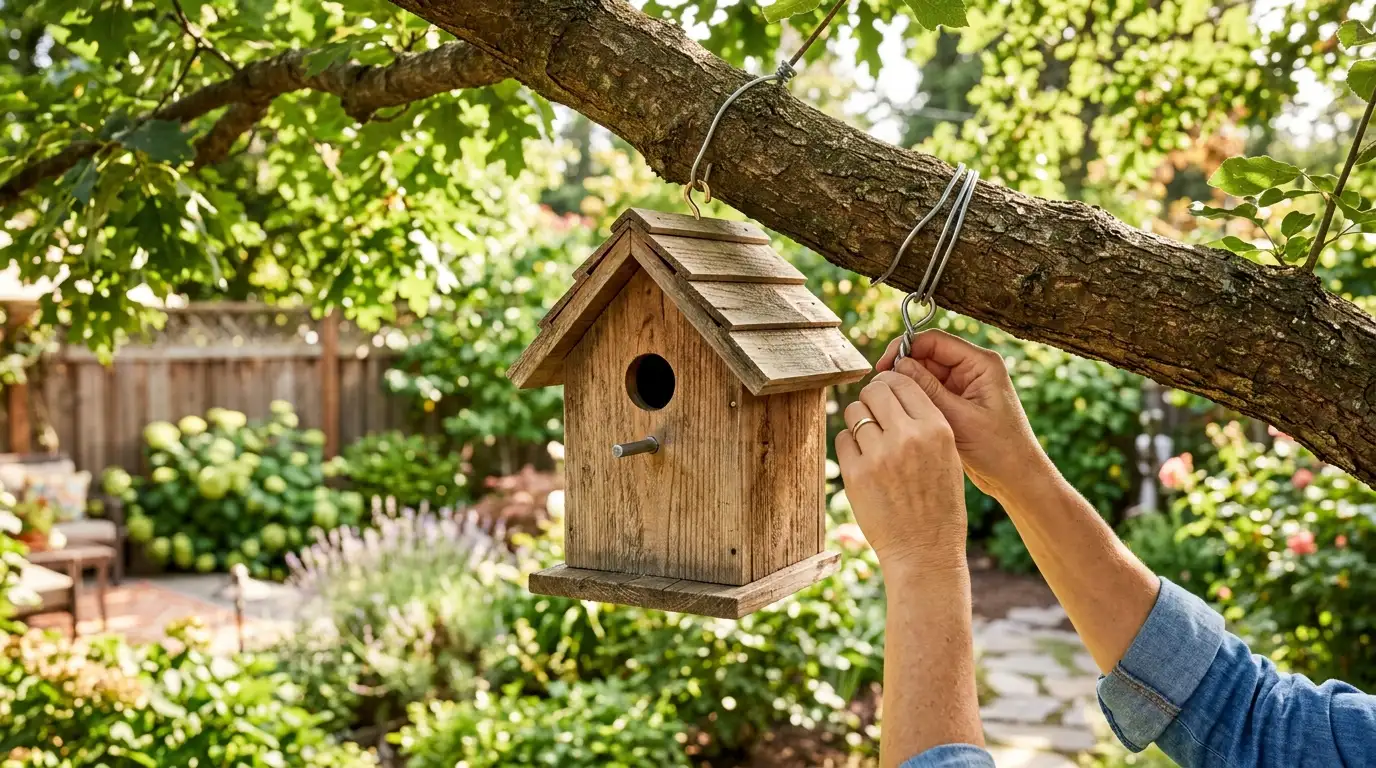
You can attach some birdhouses to trees, but the mounting method matters. Avoid damaging the tree unnecessarily with excessive nails or hardware, and make sure the house is secure without creating a hazard for the tree or the birds. A pole-mounted birdhouse can sometimes provide better protection from climbing predators and may be easier to inspect. When deciding how to hang a birdhouse, consider the bird species, predator activity, and the condition of the tree before choosing your mounting method.
Should You Put Birdseed Near a Birdhouse?
A birdhouse is intended primarily as a nesting structure, while feeders serve a different purpose. Placing a feeder directly beside a nesting box may increase activity around the entrance and can attract predators or competing birds. If you use feeders, consider placing them at an appropriate distance from the birdhouse rather than immediately next to it. Providing suitable natural habitat, such as native plants and access to water, can also make your yard more attractive to birds.
What If Birds Don't Use the Birdhouse?
Don't worry if birds don't move into a newly installed birdhouse immediately. Birds may ignore a box because of its location, entrance size, surrounding habitat, competition, or simply because the timing isn't right. Before moving it, give the house some time and observe which bird species are active in your yard. If necessary, research their preferred nesting height and habitat and adjust the placement accordingly.
Final Thoughts
Learning how to hang a birdhouse involves more than simply attaching a wooden box to a tree or post. Choose a suitable location, install the house securely, protect it from predators, and keep the entrance clear and properly oriented. Consider the nesting preferences of the bird species you want to attract before choosing the height and exact location. With thoughtful placement and occasional maintenance, a birdhouse can become a useful addition to a backyard habitat.