If you’re wondering how to weatherproof windows, start by checking where air, moisture, or heat is getting through around the frame and glass. Proper weatherproofing can reduce drafts, help keep indoor temperatures more consistent, and protect areas around the window from moisture damage. The best method depends on whether you have older wood windows, vinyl windows, aluminum frames, or newer energy-efficient units. In many cases, a combination of caulk, weatherstripping, window film, and proper maintenance can make a noticeable difference.
Why Weatherproofing Your Windows Matters
Windows can be a weak point in a home’s exterior envelope when gaps, cracked caulk, worn seals, or damaged components allow outdoor air and moisture to enter. Drafty windows can make rooms feel colder in winter and warmer in summer, even when the heating or cooling system is running normally. Moisture entering around a poorly sealed window can also contribute to peeling paint, damaged trim, and other problems. Learning how to weatherproof windows can therefore help with both comfort and basic home maintenance.
Common Signs Your Windows Need Weatherproofing
Before buying materials, look for signs that your windows are allowing air or water through. Common warning signs include:
- Noticeable drafts around the window frame
- Cracked, shrinking, or missing exterior caulk
- Peeling paint or damaged window trim
- Condensation between certain window components
- Water stains near the sill or surrounding wall
- Loose or damaged weatherstripping
- Windows that do not close tightly
- Cold spots around the window on winter days
Finding the specific source of the problem makes it easier to choose the right repair rather than sealing areas that don’t need attention.
1. Inspect the Entire Window
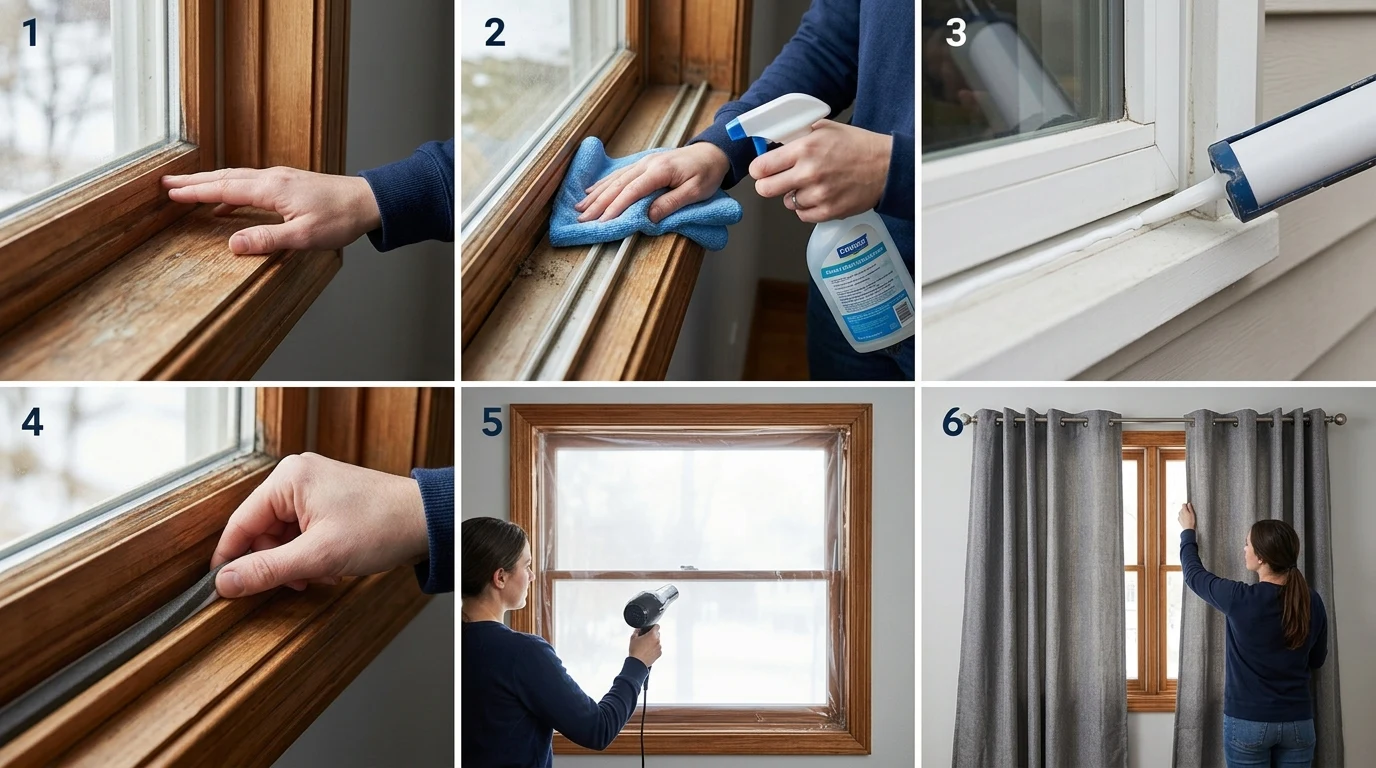
The first step in how to weatherproof windows is a careful inspection of both the inside and outside of the window. Check the frame, sash, sill, trim, caulking, weatherstripping, and any visible drainage openings. Look for cracks or gaps where two materials meet, since these areas commonly develop leaks as a home settles or sealants age. If you notice signs of significant water intrusion or structural damage, address the underlying problem before simply covering the area with new sealant.
2. Replace Damaged Weatherstripping
Weatherstripping creates a seal between moving parts of a window and helps prevent unwanted air from passing through. Over time, foam, rubber, felt, or other weatherstripping materials can become compressed, brittle, or detached. Remove damaged material and clean the surface before installing a replacement that is compatible with your window type. Properly installed weatherstripping can be particularly useful for movable sashes that have small air gaps when closed.
Where Weatherstripping Is Usually Used
| Area | Purpose | Typical solution |
|---|---|---|
| Window sash | Reduces air leakage | Foam, rubber, or compression weatherstripping |
| Moving window edges | Creates a tighter seal | Adhesive or channel-style weatherstripping |
| Meeting rails | Seals where sashes meet | Compatible sash seal |
| Interior frame gaps | Helps reduce drafts | Appropriate sealant or trim repair |
Always check the window manufacturer’s recommendations before installing a product that could interfere with opening, closing, or locking the window.
3. Re-Caulk Gaps Around the Frame
Caulk is useful for sealing stationary gaps between the window frame and the surrounding wall or trim. Start by removing loose or deteriorated caulk and cleaning the surface so the new sealant can adhere properly. Use an exterior-grade caulk on outdoor joints and select a product appropriate for the materials involved. When considering how to weatherproof windows, remember that caulk should seal stationary joints rather than prevent a window that needs to move from operating properly.
Where to Apply Exterior Caulk
Pay particular attention to visible gaps around the exterior frame, trim, and other stationary joints. Do not cover designed drainage or weep openings because they allow water that enters the window system to escape. Avoid sealing moving joints where the sash needs to slide, tilt, or otherwise operate. A clean, continuous bead is generally more effective than applying excessive amounts of caulk.
4. Use Window Film for Seasonal Protection
Insulating window film can provide an additional layer between the indoor space and the glass. Some temporary film products are designed for use during colder months and can help reduce drafts around older windows. Follow the manufacturer’s instructions carefully because different films have different installation methods and compatibility requirements. Window film is generally a supplemental measure rather than a substitute for repairing damaged frames, seals, or water leaks.
5. Install Storm Windows if Appropriate
Storm windows can add another layer of protection outside or inside an existing window. They may help reduce air movement and improve the overall insulating performance of older windows when properly installed. Before installing one, make sure the existing window is in sound condition and that moisture isn’t already trapped between layers. If the window has persistent water damage, solve the source of the moisture before adding another layer.
6. Check the Window Sill and Drainage
A window’s sill and drainage system play an important role in keeping rainwater from entering the wall assembly. Look for dirt, debris, damaged sealant, or blocked drainage openings that could prevent water from leaving the window properly. Never caulk over weep holes or other intentionally designed drainage paths. Understanding how to weatherproof windows means keeping water moving away from the window rather than simply sealing every visible opening.
7. Repair or Replace Damaged Trim
Damaged exterior trim can create gaps that allow water and air to reach the window opening. Replace severely deteriorated wood trim or repair minor damage before applying new sealant. Make sure the repaired area is properly prepared and finished according to the material manufacturer’s recommendations. If water has damaged the wall around the window, a larger repair may be necessary instead of simply adding new trim.
8. Consider Interior Draft Sealing
Interior sealing can help address small air leaks that remain after exterior repairs have been completed. Depending on the construction, small gaps around interior trim may be sealed with an appropriate paintable sealant. Removable draft-blocking products can also provide a temporary option during particularly cold weather. However, interior sealing should not be used to hide an unresolved exterior water leak.
9. Improve Window Coverings
Window coverings aren’t a replacement for proper weatherproofing, but they can provide an additional barrier between the room and the glass. Cellular shades, insulated curtains, and other fitted coverings may help reduce the effect of cold or hot glass on the room. Keep in mind that the effectiveness of a covering depends on how well it fits and how it is installed. If you have substantial drafts, repair the window itself before relying on curtains or shades.
Weatherproofing Methods at a Glance
The best approach depends on the problem you’re trying to solve.
| Problem | Recommended approach |
|---|---|
| Draft around a moving sash | Replace weatherstripping |
| Gap around a stationary frame | Apply appropriate caulk |
| Old single-pane glass | Consider storm windows or insulating film |
| Water near the sill | Check drainage and exterior seals |
| Damaged exterior trim | Repair or replace the trim |
| Minor interior air leakage | Seal appropriate gaps around trim |
| Persistent water intrusion | Investigate the underlying cause |
This type of targeted repair is usually more effective than applying the same product to every part of the window.
Can You Weatherproof Windows From the Inside?
Yes, some weatherproofing measures can be performed from inside the home. Interior options include temporary window film, draft-blocking products, and appropriate sealant around stationary interior trim. However, exterior caulking, damaged siding or trim, and drainage problems may require work outside. If you’re researching how to weatherproof windows because of a persistent leak, sealing the interior alone may conceal the symptom without fixing the source.
When Should You Replace a Window Instead?
Weatherproofing can improve the performance of a window that is basically sound, but it isn’t always the right solution for a severely damaged unit. Consider professional evaluation if the frame is rotting, the window no longer closes or locks properly, or water repeatedly enters despite reasonable repairs. Fogging between sealed glass panes can also indicate a failed insulating glass seal that caulking won’t fix. In these situations, repair or replacement may make more sense than repeatedly adding sealant.
Seasonal Window Weatherproofing Checklist
Before Winter
- Inspect exterior caulk for cracks.
- Replace damaged weatherstripping.
- Check window locks and closing mechanisms.
- Look for gaps around the frame.
- Inspect the sill and drainage openings.
- Install temporary insulating film if appropriate.
Before Summer
- Check for damaged exterior seals.
- Clean window tracks and drainage areas.
- Inspect trim for moisture damage.
- Verify that windows close securely.
- Check exterior caulk after periods of extreme weather.
Regular inspections can help you identify small problems before they become more expensive repairs.
Final Thoughts
Knowing how to weatherproof windows starts with identifying whether the problem is caused by drafts, worn seals, damaged caulk, poor drainage, or deteriorated materials. Weatherstripping, exterior caulk, window film, storm windows, and proper maintenance can each address different parts of the problem. Avoid covering drainage openings or using sealant on areas that need to move, and investigate persistent water intrusion rather than simply sealing over it. With the right repairs and regular inspections, you can improve window performance while protecting your home from unnecessary air and moisture infiltration.
Frequently Asked Questions
What is the easiest way to weatherproof a window?
Replacing worn weatherstripping and sealing appropriate stationary gaps with quality caulk are two common starting points. These methods are relatively simple when the window itself is in good condition. The correct solution depends on where the air or water is entering. Always avoid sealing drainage openings or moving parts.
Does caulking windows stop drafts?
Caulking can reduce drafts that come through stationary gaps around a window frame. It won’t fix drafts caused by poorly sealed moving sashes, damaged weatherstripping, or a defective window unit. Inspect the source of the draft before applying caulk. Using the wrong type of caulk or sealing a moving joint can interfere with the window’s operation.
Is window film worth using?
Window film can be useful as a temporary or supplemental measure, particularly on older windows during cold weather. It doesn’t replace damaged weatherstripping, failed seals, or repairs for water intrusion. Choose a product designed for the type of window you have and follow its installation instructions. For permanent problems, addressing the underlying window issue is generally more appropriate.
How often should window caulk be replaced?
There isn’t a universal replacement schedule because caulk life depends on the product, weather exposure, movement, and surrounding materials. Inspect exterior caulk periodically for cracking, shrinking, separation, or other visible deterioration. Replace it when it no longer forms a continuous seal. Regular inspections are more useful than replacing sound caulk simply because a certain amount of time has passed.