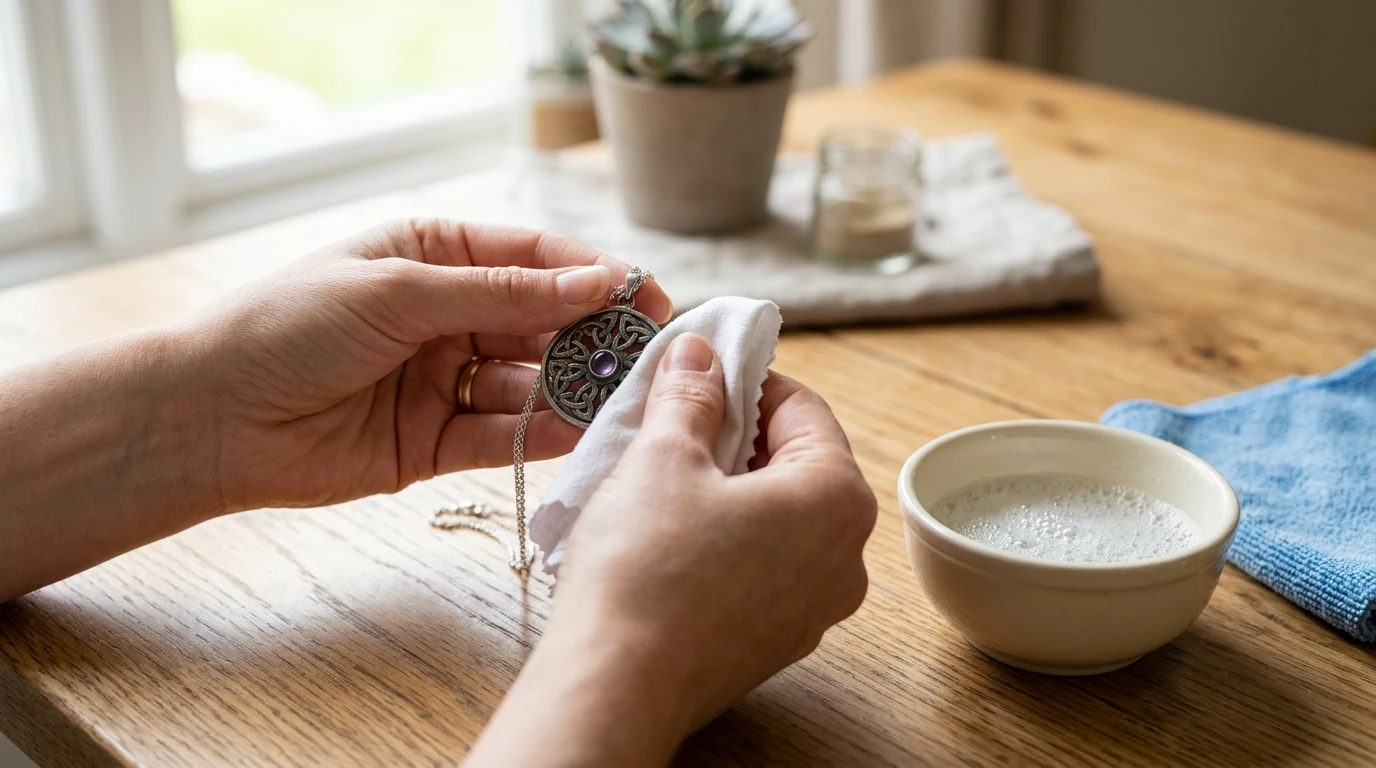
If you’re wondering how do you clean pewter jewelry, the good news is that the process is usually simple and requires only a few gentle household supplies. Pewter has a soft, attractive metallic appearance that can become dull when exposed to skin oils, dust, lotions, and everyday grime. Because pewter is softer than many other common jewelry metals, it needs careful handling during cleaning. Using mild products and avoiding abrasive materials can help preserve both its appearance and finish.
What Is Pewter Jewelry?
Pewter is a malleable metal alloy composed of roughly 85% to 99% tin, traditionally combined with small percentages of copper and antimony (and occasionally bismuth) to harden the structure and enhance casting detail. Modern pewter products are generally made without the lead that was sometimes used in older pewter items. Jewelry made from pewter can have several different finishes, including polished, matte, textured, and antique-style surfaces. The type of finish is important because aggressive cleaning or polishing can change the way the jewelry looks.
What You Need to Clean Pewter Jewelry
Before learning how do you clean pewter jewelry, gather a few basic supplies that are gentle enough for the metal. You’ll need lukewarm water, a small amount of mild dish soap, and a soft microfiber or cotton cloth. A soft-bristled toothbrush can also be useful when dirt is trapped inside detailed designs or small crevices. Keep abrasive sponges, steel wool, harsh chemicals, and rough brushes away from pewter because they can scratch or damage its surface.
1. Inspect the Jewelry First
The first step in learning how do you clean pewter jewelry is to examine the piece carefully before using water or soap. Check whether it contains gemstones, pearls, crystals, glued decorations, or other materials that may require special care. Look for loose stones, damaged areas, or cracks that could become worse during cleaning. If the jewelry is vintage, valuable, or particularly sentimental, consider checking its care instructions or consulting a professional before performing a deep cleaning.
2. Prepare a Mild Cleaning Solution
Add a small amount of mild dish soap to a bowl of lukewarm water to create a gentle cleaning solution. You don’t need much soap because excessive detergent can leave a residue on the metal. Avoid very hot water, especially if the jewelry contains stones, adhesives, or decorative elements that may not respond well to heat. A mild solution is generally sufficient for removing everyday oils, dust, and surface grime from pewter.
3. Gently Wipe the Surface
Once your cleaning solution is ready, dip a soft cloth into it and wring out the excess water. Gently wipe the jewelry to remove dirt and oils without applying excessive pressure. Pay particular attention to areas that touch your skin frequently, since these areas can collect body oils and personal-care products. If you’re still learning how do you clean pewter jewelry, remember that gentle wiping is preferable to vigorous scrubbing because pewter can be relatively soft.
4. Clean Detailed Designs Carefully
Pewter jewelry often includes engraved patterns, raised designs, or small decorative spaces where dirt can accumulate. For these areas, use a clean, soft-bristled toothbrush and lightly brush the surface. Work slowly and use minimal pressure so you don’t scratch the finish or wear down delicate details. A damp cloth can then be used to remove loosened dirt from the jewelry.
5. Remove Any Soap Residue
After cleaning, it is important to remove leftover soap from the surface of the jewelry. You can use a separate soft cloth dampened with clean lukewarm water and gently wipe the entire piece. If the jewelry can safely be rinsed, briefly rinse it under lukewarm running water, but avoid prolonged soaking. Knowing how do you clean pewter jewelry also means knowing when to stop, because excessive exposure to water isn’t necessary for ordinary cleaning.
6. Dry the Jewelry Completely
Use a soft, clean towel to carefully pat the jewelry dry after cleaning. Avoid rubbing it aggressively with the towel, particularly if the pewter has a delicate or decorative finish. Check small grooves and crevices to make sure no moisture remains trapped in the piece. Allowing the jewelry to air-dry completely before storing it can help prevent moisture-related residue and discoloration.
7. Buff and Polish Mindfully Based on Finish
Whether you should polish pewter depends largely on the finish of the jewelry. A polished pewter piece may benefit from gentle buffing with a soft jewelry cloth, while an antique or oxidized piece may be designed to have a darker appearance. Excessive polishing can remove some of the surface character that gives an antique-style piece its distinctive look. If you’re unsure how do you clean pewter jewelry without changing its finish, avoid strong polishing compounds and follow the manufacturer’s care recommendations.
If bright, polished pewter has lost its luster and simple soap isn’t enough, you can revive it with a mild homemade paste:
- Mix 1 tablespoon of white vinegar, 1 teaspoon of fine table salt, and enough all-purpose flour (roughly 2 tablespoons) to create a smooth, spreadable paste.
- Apply a thin layer to bright-finish pewter and let it sit for 10 to 15 minutes.
- Gently buff it off using a damp microfiber cloth, then rinse and dry thoroughly.
Note: Never use this method on pieces with an intentional black patina or oxidized antique finish, as the mild acid will strip the darker recessed shading.
What Cleaning Products Should You Avoid?
Some popular household cleaning methods are too aggressive for pewter and should not be used as a routine cleaning solution. Avoid bleach, ammonia, abrasive powders, steel wool, rough scouring pads, and strong metal cleaners unless a qualified professional specifically recommends one. Silver polish should also not automatically be used on pewter because products designed for one metal may not be appropriate for another. Gentle cleaning is usually the safer approach when you’re trying to preserve the original appearance of pewter jewelry.
Professional jewelry cleaning equipment should be kept far away from pewter. Ultrasonic baths rely on high-frequency sound waves that can loosen stone settings, fracture delicate soft solder joints, and strip away decorative chemical patinas. Similarly, high-temperature jewelry steam guns risk melting glue adhesives or warping thin, low-melting-point tin alloys. Stick strictly to hand cleaning at room temperature.
How Often Should You Clean Pewter Jewelry?
Pewter jewelry doesn’t necessarily need to be cleaned on a strict schedule. If you wear a piece frequently, a quick wipe with a soft, dry cloth after wearing it can help remove oils and everyday residue before they build up. A more thorough cleaning can be performed whenever the jewelry looks dirty, dull, or noticeably coated with residue. If you’re still asking how do you clean pewter jewelry regularly, focusing on gentle maintenance rather than frequent deep cleaning is a practical approach.
How to Store Pewter Jewelry
Proper storage can help reduce the amount of cleaning your pewter jewelry needs over time. Keep each piece in a dry jewelry box, soft pouch, or separate compartment where it won’t constantly rub against harder jewelry. Store pewter away from excessive moisture and avoid leaving it in bathrooms or other humid areas for long periods. You can also wipe the jewelry gently before putting it away to remove oils, lotions, and other substances picked up during wear.
To keep pewter jewelry stable during long-term storage:
- Add Silica Gel Packets: Place a small packet of moisture-absorbing silica gel inside your jewelry box to prevent humid air from creating gray surface oxidation.
- Avoid PVC Plastic Bags: Do not store pewter in cheap PVC plastic baggies. Over time, plasticizers break down and release acidic gases that cause sticky residue and chemical pitting on soft tin surfaces; use acid-free cotton pouches or zip-top bags made from polyethylene (PE) instead.
What If the Jewelry Has Become Dark or Discolored?
Pewter can naturally develop changes in appearance over time, and darker areas aren’t necessarily a sign that the jewelry is dirty. Some pieces are intentionally treated to create an antique, aged, or oxidized appearance, so aggressive polishing may actually remove part of the intended finish. If the jewelry has changed significantly in color, first check whether the manufacturer provides specific care instructions. When determining how do you clean pewter jewelry with a specialized finish, preserving the original surface should generally be more important than making the piece look completely new.
How to Test Vintage Pewter for Lead Content
While modern pewter jewelry produced after the late 20th century is strictly lead-free, heirloom or antique pieces found at flea markets, estate sales, and vintage shops may contain lead:
- Visual & Tactile Clues: Lead-bearing vintage pewter is noticeably heavier in the hand, has a distinctly darker bluish-gray tone, and leaves a dark smudge when dragged gently across a sheet of white paper.
- Instant Lead Swab Test: Before wearing vintage pewter directly against bare skin, use an over-the-counter chemical lead-check swab (available at hardware stores). Rub the swab onto an inconspicuous area of the piece—if the swab turns pink or red, the alloy contains lead and should be displayed rather than worn.
Final Thoughts
Learning how do you clean pewter jewelry is mostly about using a gentle approach and avoiding unnecessary chemicals or abrasive materials. Lukewarm water, mild soap, a soft cloth, and careful drying are usually enough to handle ordinary dirt and buildup. Jewelry with gemstones, glued components, antique finishes, or significant sentimental value may require additional precautions. With regular gentle care and proper storage, pewter jewelry can maintain its distinctive appearance and remain enjoyable to wear for years.
Frequently Asked Questions
Can I wear pewter jewelry in the shower or swimming pool?
No, you should always take pewter jewelry off before showering, swimming, or soaking in hot tubs. Tap water contains minerals and chlorine that accelerate dulling, while high-chlorine pool water and saltwater will severely discolor and pit the soft tin surface.
Will pewter jewelry turn my skin green or black?
Modern lead-free pewter is hypoallergenic and rarely causes skin discoloration because tin does not react with skin chemistry the way copper or nickel does. However, if a piece contains a higher copper content or has accumulated heavy sweat and chemical residues, you may occasionally notice faint gray smudging. Routine cleaning with mild soap and water eliminates this issue.
Can I use silver polishing cloths on pewter?
Standard untreated microfiber jewelry cloths are completely safe, but you should avoid chemical-treated cloths designed for sterling silver. Those cloths are impregnated with micro-abrasives and anti-tarnish chemicals formulated for harder metals, which can strip pewter’s softer finish or remove intended antique shading.
What should I do if my pewter jewelry gets scratched?
Because pewter is a relatively soft alloy, fine surface scratches can occur over time. For bright, polished pewter, gentle buffing in circular motions with a clean jeweler’s cloth or a specialized non-abrasive pewter cream can blend minor surface scuffs. Deep gouges, however, should be evaluated by a metalsmith rather than scrubbed at home.
Is baking soda safe for cleaning pewter?
It is best to avoid baking soda. Although popular for cleaning sterling silver with boiling water and foil, baking soda is too abrasive for soft tin and can leave fine, hazy micro-scratches across polished surfaces or dissolve chemical antiquing agents in the recesses. Stick to mild dish soap and warm water instead.