If you’re wondering how to reduce chlorine in hot tub water, the first step is to stop adding chlorine and test the water to determine how high the level actually is. Chlorine is important for keeping hot tub water sanitized, but too much can cause a strong chemical smell, skin irritation, or uncomfortable water. Fortunately, chlorine levels can usually be brought down through a combination of time, circulation, and proper water management. The right approach depends on how high the chlorine level is and whether you need the hot tub ready immediately.
Why Is Chlorine Important in a Hot Tub?
Chlorine helps control bacteria and other microorganisms that can grow quickly in warm water. Hot tubs require regular sanitation because their warm temperatures and frequent use create conditions where contaminants can accumulate. However, adding more chlorine than necessary can cause the sanitizer level to rise above the recommended range. Understanding how to reduce chlorine in hot tub water starts with maintaining the right balance rather than eliminating chlorine completely.
1. Stop Adding Chlorine
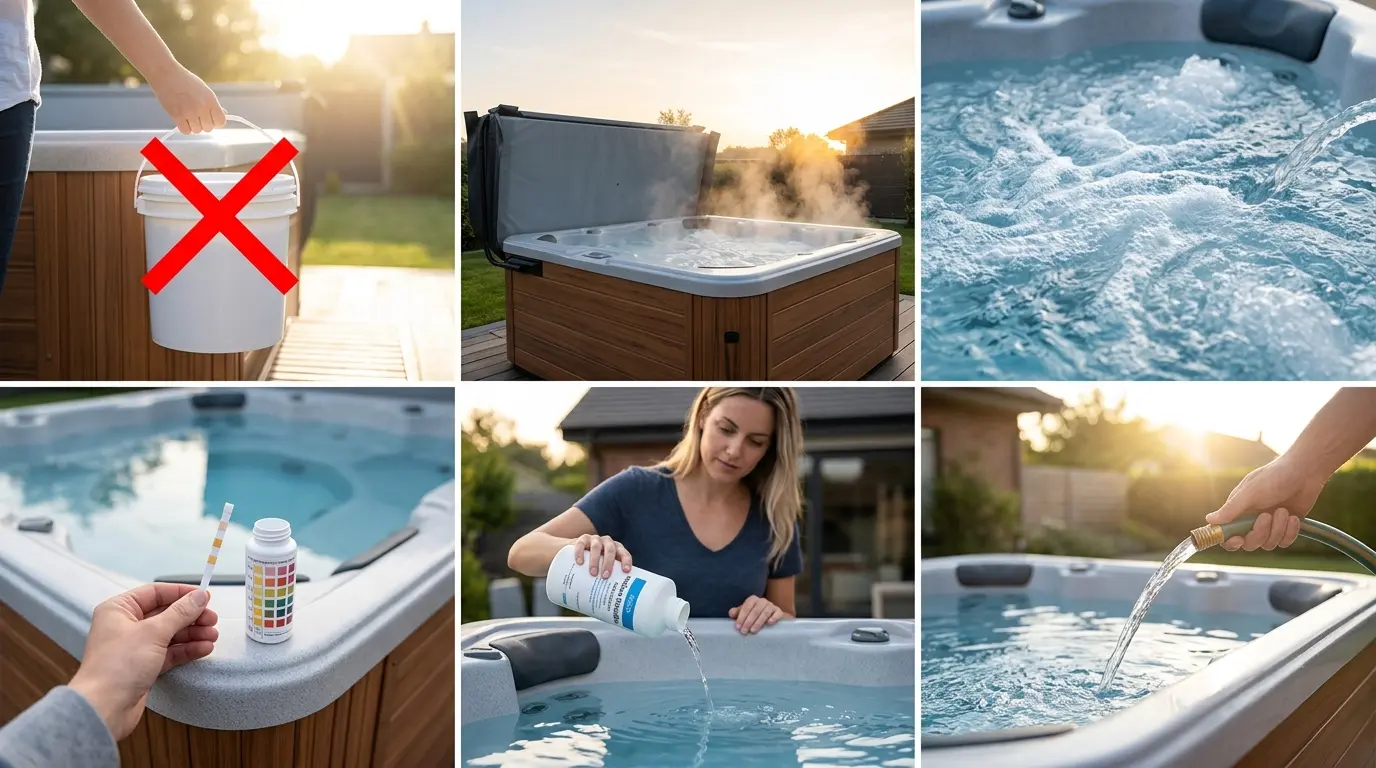
If your test shows that the chlorine level is too high, temporarily stop adding chlorine to the water. This gives the existing chlorine time to break down naturally instead of continuously increasing the concentration. Avoid adding additional chlorine simply because the water looks cloudy unless your water test indicates that more sanitizer is actually needed. Once the chlorine level returns to the appropriate range, you can resume your normal sanitation routine.
2. Leave the Hot Tub Uncovered
Removing the hot tub cover can allow some chlorine to dissipate more quickly, particularly when the water is circulating. Chlorine can escape from the water as a gas, and ventilation can help speed up that process. Keep the area around the hot tub well ventilated and follow the manufacturer’s safety recommendations when leaving the cover open. If you’re researching how to reduce chlorine in hot tub water naturally, allowing appropriate ventilation and time is one of the simplest approaches.
3. Run the Circulation System
Turning on the circulation or filtration system can help distribute the water evenly while allowing the sanitizer to dissipate. Make sure the filters are clean and operating properly so the system can circulate the water effectively. Follow the manufacturer’s instructions regarding how long the pump and filtration system should run. Avoid running equipment for unnecessarily long periods if your hot tub manufacturer recommends a specific operating schedule.
4. Test the Water Regularly
Testing is one of the most important steps when learning how to reduce chlorine in hot tub water safely. Use an appropriate hot tub test kit or test strips to monitor chlorine and other important water parameters. Check the water periodically rather than guessing when the level has returned to normal. Once the chlorine level reaches the range recommended by your hot tub manufacturer or sanitizer system, you can return to your regular maintenance routine.
Hot Tub Chlorine Reduction & Dilution Calculator
Enter your hot tub parameters and calculate the exact water dilution or chemical neutralizer needed to safely lower chlorine.
5. Use a Chlorine Neutralizer When Necessary
If the chlorine level is significantly higher than recommended and you need to lower it more quickly, a chlorine-neutralizing product may be an option. Products containing sodium thiosulfate are commonly used to reduce chlorine, but they should be used according to the manufacturer’s dosage instructions. Adding too much neutralizer can remove more chlorine than intended and leave the water inadequately sanitized. For that reason, test the water before and after treatment rather than adding a large amount at once.
6. Replace Some of the Water
When chlorine levels are extremely high or the water chemistry has become difficult to balance, partially draining and replacing some of the water can help reduce the concentration. Fresh water dilutes the existing chlorine and may also help correct other water-balance problems. If you drain or refill the hot tub, follow the manufacturer’s instructions and retest the water before using it. This approach can be particularly useful when the water has been exposed to excessive chemicals or has other maintenance issues.
How Long Does It Take for Chlorine to Go Down?
There isn’t one exact time because chlorine levels change based on several factors. Water temperature, sunlight, circulation, the starting chlorine concentration, and the amount of organic material in the water can all influence how quickly chlorine dissipates. A moderately elevated level may decline naturally with time, while a very high concentration can require additional steps. The most reliable way to know when the water is ready is to test it rather than relying on a specific number of hours.
Can You Use a Hot Tub With High Chlorine?
You should not use a hot tub while the chlorine level is outside the safe range recommended by the manufacturer or your sanitizer system. High chlorine concentrations can irritate the skin, eyes, and respiratory system, particularly in the warm environment of a hot tub. Wait until testing confirms that the chlorine level has returned to the appropriate range. If you are unsure how to reduce chlorine in hot tub water to a safe level, consult the instructions for your specific sanitizer and hot tub system.
Avoid Adding Random Chemicals
It may be tempting to add multiple chemicals when trying to correct high chlorine, but doing so without testing can make the water chemistry more difficult to manage. Different products can interact with one another, and excessive chemical additions may create additional problems. Always read the product label and follow the recommended dosage for your hot tub’s water volume. Testing first gives you a much clearer idea of whether you need to wait, dilute the water, or use a specific neutralizing product.
How to Prevent High Chlorine Levels
Preventing excessive chlorine is easier than repeatedly correcting it. Measure the water volume of your hot tub and use the sanitizer dosage recommended for that volume rather than estimating. Test the water regularly, especially after heavy use, and keep track of how much chlorine you add. Following a consistent maintenance routine can make it easier to keep chlorine within the appropriate range and avoid needing to figure out how to reduce chlorine in hot tub water after every treatment.
Final Thoughts
Knowing how to reduce chlorine in hot tub water can help you correct an accidentally high sanitizer level without unnecessarily disrupting your maintenance routine. Start by stopping chlorine additions, allowing appropriate ventilation, circulating the water, and testing it regularly. For significantly elevated levels, a properly dosed chlorine neutralizer or partial water replacement may provide a faster solution. Always follow your hot tub manufacturer’s instructions and wait until testing confirms that the water is within the recommended range before using the hot tub.