Learning how to grow lavender plants is one of the most rewarding projects any gardener can take on. Renowned for their soothing aromatic foliage, purple floral spikes, and ability to attract essential pollinators, these Mediterranean subshrubs are hardy, drought-tolerant, and remarkably low-maintenance once established.
However, many beginner gardeners struggle because lavender has strict environmental preferences. If you give it rich, damp soil and heavy fertilizer, it will quickly rot and fail. To understand how to grow lavender plants successfully, you must replicate their native Mediterranean conditions: intense sun, lean soil, and exceptional drainage.
This guide covers everything you need to know about how to grow lavender plants in the ground or in containers, from picking the right species to mastering annual pruning.
Choosing the Right Lavender Species for Your Climate
Before digging a hole, you need to pick a variety suited to your local winter temperatures and summer humidity. Not all lavender plants share the same hardiness.
| Lavender Type | Common Botanical Name | USDA Hardiness Zones | Best Climate & Features |
| English Lavender | Lavandula angustifolia | Zones 5–9 (Tolerates frost to -20°F / -29°C) | Cold-hardy; best culinary flavor; sweet perfume; compact habit. |
| French Lavender | Lavandula dentata | Zones 8–11 (Mild winters only) | Distinct serrated leaves; long flowering season; moderate cold tolerance. |
| Spanish Lavender | Lavandula stoechas | Zones 7–10 (Tender perennial) | Rabbit-ear flower bracts; thrives in dry summer heat; dislikes freezing wet winters. |
| Lavandin (Hybrid) | Lavandula x intermedia | Zones 5–9 (Very cold-hardy) | Large bushes; very high essential oil content; long, striking flower stems. |
If you live in a region with cold, snowy winters, English lavender or a hardy hybrid like ‘Grosso’ is your best choice. If you live in an arid, mild-winter climate, Spanish and French types will thrive effortlessly.
Ideal Soil and Sunlight Requirements
When learning how to grow lavender plants, soil drainage is the single most critical factor. More lavender plants die from overwatering and soggy winter soil than from drought, neglect, or pests combined.
Soil pH and Drainage: The Golden Rule
Lavender native habitats feature rocky, sandy, nutrient-poor ground.
- Drainage: Soil must shed water rapidly. Heavy clay soil holds too much moisture around the roots, causing fatal root rot (Phytophthora).
- Soil Texture: If your soil is dense, blend in coarse horticultural grit, crushed gravel, or coarse sand. Never add rich organic compost or peat moss, which hold excess moisture.
- Soil pH: Lavender thrives in neutral to slightly alkaline soil with a pH between 6.5 and 7.5. If your soil is acidic (below 6.5), mix in agricultural lime to raise the pH level before planting.
Sun and Airflow Needs
To grow lavender plants with dense foliage and vibrant blooms, plant them in full sun. They require at least 6 to 8 hours of direct, unfiltered sunlight daily. Plants grown in partial shade will grow leggy, flop over, and produce few flowers.
Spacing is equally important. In humid regions, stagnant air trapped between closely spaced bushes invites fungal leaf spot. Always space mature plants 2 to 3 feet (60 to 90 cm) apart to guarantee steady airflow around the foliage.
Step 1: Planting Lavender in Garden Beds or Pots
The best time to plant lavender is in the spring, once the threat of heavy frost has passed and the soil begins to warm up. In warm winter zones (Zones 8–10), lavender can also be planted in early autumn to establish roots before spring.
Planting in the Ground
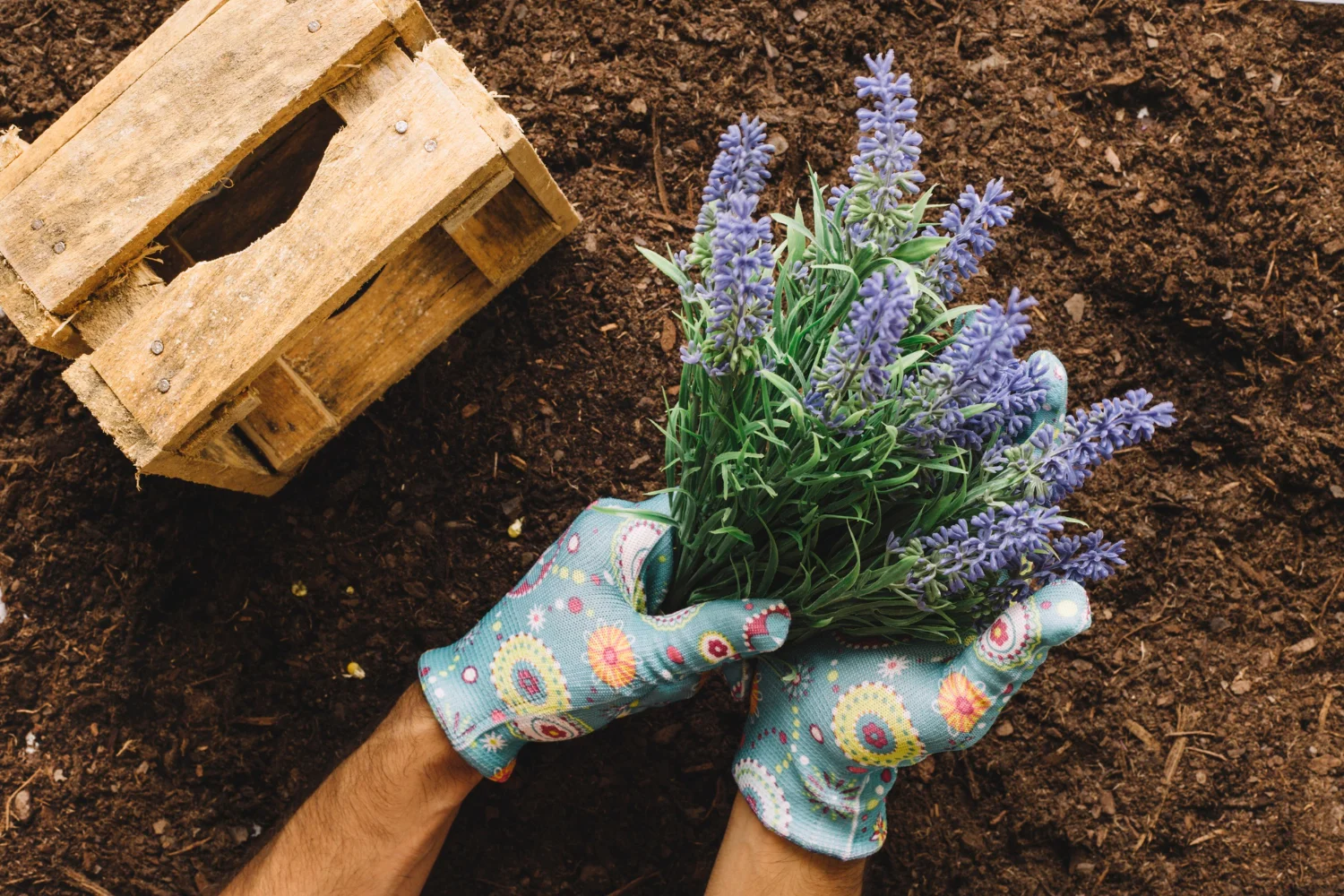
- Dig the Hole: Dig a hole twice as wide as the nursery container, but keep the depth identical to the root ball.
- Add Drainage Grit: If the native soil is slightly dense, mix a shovel of coarse gravel or pumice into the backfill soil. For poorly draining landscapes, build an elevated mound or raised planting bed 6 to 12 inches high.
- Position the Plant: Set the plant so that the crown—the point where the stems meet the roots—sits level with or slightly higher than the surrounding soil surface. Burying the crown too deep causes rot.
- Backfill and Firm: Fill the hole with your gravel-soil mix and firm it gently with your hands to eliminate air pockets.
- Water In: Water the base deeply to settle the soil around the roots.
How to Grow Lavender Plants in Containers
If your garden soil is heavy clay, growing lavender plants in pots is the best way to control soil drainage and sun exposure.
- Select the Container: Use a terra-cotta or unglazed ceramic pot with large drainage holes. Terra-cotta is porous and allows moisture to evaporate through the container walls. Choose a pot at least 12 to 16 inches (30 to 40 cm) in diameter.
- Mix the Medium: Never use regular garden dirt or standard dense potting soil. Combine 60% quality soilless potting mix with 40% coarse perlite, pumice, or horticultural sand.
- Plant and Elevate: Place the lavender in the pot, fill the mix around it, and keep the crown well above the rim. Set the container on pot feet so drainage holes are never blocked by flat surfaces.
Step 2: Watering Rules (Less is Always More)
A vital rule for how to grow lavender plants is knowing when to put the hose away. Lavender is drought-tolerant once established, but young transplants require careful attention during their first growing season.
- First Season (Establishment): Water newly planted lavender once or twice a week during dry stretches. Check the soil 2 inches below the surface; water only when that layer is dry.
- Established Plants (Year Two Onward): Established in-ground lavender plants rarely need supplemental watering unless you face weeks of severe drought. In most climates, rainfall alone provides plenty of moisture.
- Container Plants: Pots dry out faster than garden beds. Check container lavender weekly and water thoroughly when the top 2 inches of soil feel completely dry. Always pour water directly onto the soil, never over the leaves.
Step 3: Feeding and Soil Amendments
One of the most common mistakes when discovering how to grow lavender plants is giving them too much fertilizer.
- Avoid High-Nitrogen Feeds: Nitrogen encourages weak, floppy, leafy growth with very few fragrant flower spikes, while making the plant more vulnerable to winter dieback.
- No Heavy Compost: Heavy layers of manure or rich compost trap moisture against the base stems and feed pathogens.
- The Proper Feeding Routine: In most garden soils, lavender needs zero fertilizer. For potted plants, a single light application of diluted organic potassium-rich fertilizer or a dusting of bone meal once in early spring is all that is required for the entire season.
- Mulching Rules: Never use wood bark or shredded hardwood mulch around lavender, as organic mulches trap dampness around the base. Instead, use a 1-inch layer of pea gravel, light crushed stone, or white grit. Gravel reflects heat into the foliage and keeps the base stems dry.
Step 4: How and When to Prune Lavender
If you want to know how to grow lavender plants that remain bushy, compact, and full of blossoms year after year, pruning is non-negotiable. Without annual pruning, lavender bushes turn sprawling, open, and hollow, with thick woody branches that do not produce new leaves.
First-Year Pruning for Bushy Growth
When you plant young lavender in its first year, pinch off the early flowering buds as they appear. While it feels counterintuitive to remove blooms, this directs the plant’s energy into establishing deep roots and dense branch branching rather than seed production.
Annual Pruning to Prevent Woody Stems
Prune established lavender once a year, either in late summer right after the main flowers fade, or in early spring just as new green growth begins to show.
- Use Clean Shears: Clean your pruning shears with rubbing alcohol to prevent spreading pathogens.
- Cut the Green Stems: Cut back all green leafy stems by approximately one-third to one-half of their length, shaping the bush into a rounded dome.
- The Cardinal Pruning Rule: Never cut down into the old, brown, bare woody base. Lavender stems rarely sprout new growth from old wood. If you cut below the green leaves into the dead-looking wood, that entire branch may die. Always leave at least 1 to 2 inches of green foliage on every stem you trim.
Step 5: Overwintering and Frost Protection
Cold, wet conditions are the primary winter threat to lavender plants.
- In-Ground Beds (Zones 5–8): Ensure autumn drainage is unobstructed. In areas with sub-zero winter temperatures, cover plants loosely with evergreen boughs or breathable horticultural fleece to shield them from drying winds and frost heave. Do not mulch with wet leaves or straw.
- Container Lavender (Cold Climates): Container root systems are exposed to freezing air on all sides. Before winter freezes arrive, move pots into an unheated garage, shed, or cold frame where temperatures stay between 35°F and 45°F (2°C to 7°C). Water sparingly—only once every 4 to 6 weeks—just to keep the root ball from turning bone-dry.
Step 6: Harvesting and Drying Lavender Blooms
Knowing how to grow lavender plants culminates in harvesting the fragrant flowers for teas, sachets, oils, and bouquets.
- When to Harvest: The optimal time to cut lavender is in the early morning, after dew has evaporated but before the mid-day heat vaporizes the essential oils. Harvest when the bottom row of florets on each spike has just opened, while the upper buds remain closed.
- How to Cut: Cut the flower stems down to the top set of green leaves using clean snips.
- Drying Process: Bundle 20 to 30 stems together with a rubber band. Hang the bundles upside down in a dark, warm, well-ventilated location for 10 to 14 days. Darkness preserves the deep purple color of the petals. Once dry, strip the buds from the stems and store them in an airtight glass jar away from direct light.
Troubleshooting Common Problems with Lavender Plants
| Symptom / Problem | Underlying Cause | Corrective Action |
| Drooping, soft stems and yellowing lower leaves | Overwatering or poor drainage (root rot) | Stop watering immediately. Check that drainage holes are clear. Dig down to check roots; trim rotted black roots and replant in gravel-amended soil. |
| Hollow, sprawling center with bare woody branches | Neglected pruning | Prune the outer green stems back by one-third every year. Do not prune into bare wood; if the center is completely woody, take cuttings and start new plants. |
| Sparse blooming and leggy growth | Insufficient sunlight or excess nitrogen | Move plants to an area receiving at least 6 to 8 hours of direct sun daily. Stop using high-nitrogen chemical fertilizers. |
| Black, moldy patches on leaves | High humidity and poor airflow | Thin surrounding plants to improve air circulation. Swap out organic bark mulch for crushed rock or pea gravel to keep the air dry. |
| Sudden dieback of a single branch in summer | Alfalfa mosaic virus or fungal root rot | Prune out the affected branch back to healthy tissue. Disinfect shears after every cut to avoid contaminating adjacent plants. |
Frequently Asked Questions
Can I grow lavender plants from grocery store seeds?
Starting lavender from seed is notoriously slow, with low germination rates (often 30–50%) that can take up to a month to emerge. Most gardeners choose to grow lavender plants from nursery starts or softwood cuttings taken in summer, which root quickly and produce clones that match the parent plant’s exact aroma and vigor.
How long do lavender plants live?
When grown in well-drained soil and pruned annually, lavender plants typically live for 10 to 15 years. Without regular pruning, bushes tend to become woody, brittle, and unproductive after 5 to 7 years.
Why do the leaves on my lavender plants smell like camphor instead of sweet flowers?
Different lavender varieties contain different essential oil profiles. Spanish lavender (Lavandula stoechas) and Lavandin hybrids naturally contain higher levels of camphor, which smells herbal and medicinal. If you want a sweet, floral, culinary scent, choose true English lavender (Lavandula angustifolia cultivars like ‘Munstead’ or ‘Hidcote’).
Can you grow lavender plants indoors on a windowsill?
You can grow lavender plants indoors only if you have a bright, south-facing windowsill that provides at least 6 to 8 hours of direct daily sunlight. Indoor plants require extra attention to airflow and must dry out thoroughly between waterings. If natural sunlight is limited, use a full-spectrum LED grow light set 6 to 8 inches above the foliage.