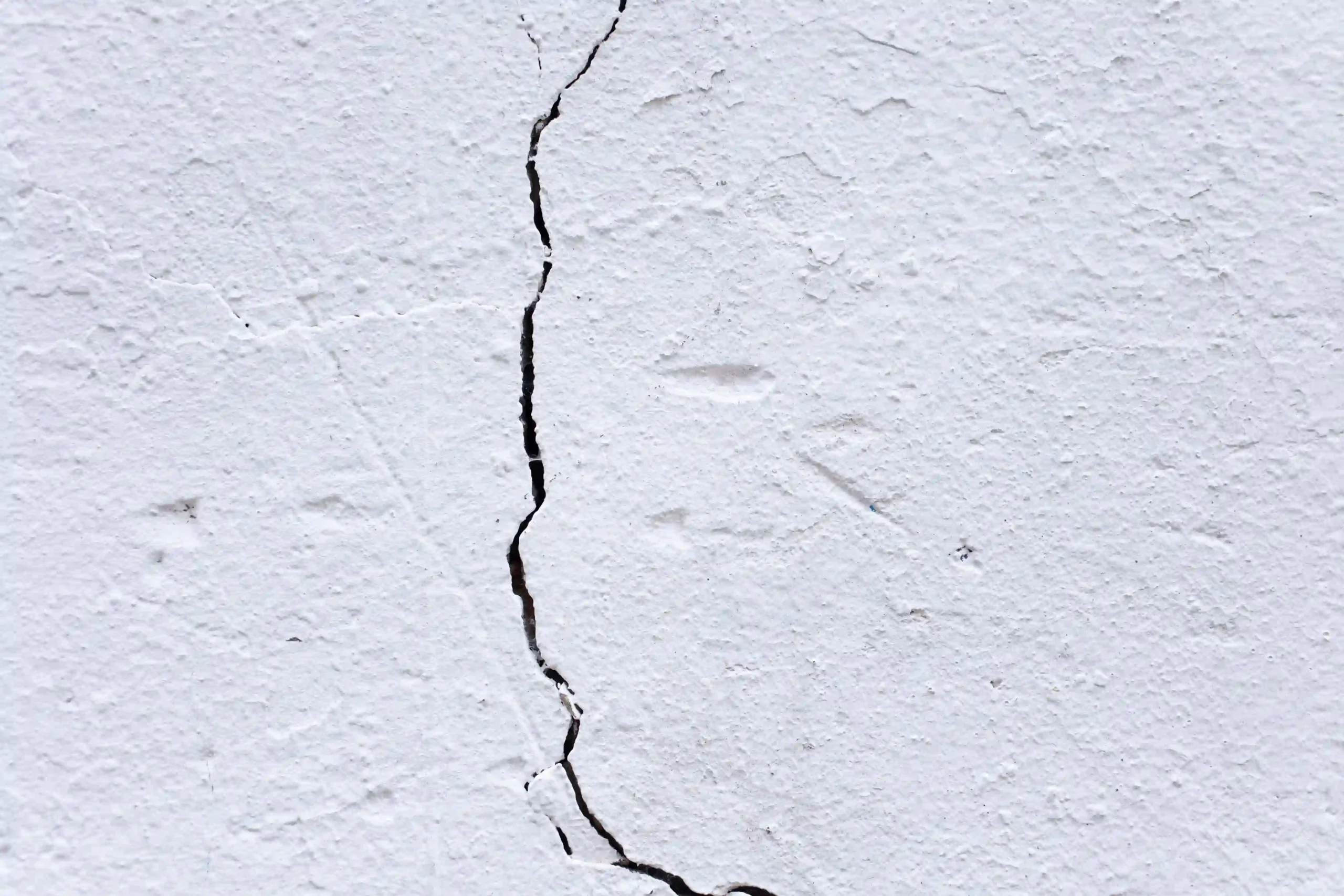
What causes cracks in drywall? Most appear when framing shifts, temperature or humidity changes, taped seams weaken, or water reaches the wall. Foundation movement can cause cracks too, particularly when other signs of distortion appear.
I wouldn’t assume every thin line means an expensive repair. First, I’d look at where the crack started, whether it’s changing, and what else is happening around it.
What Causes Cracks in Drywall?
Drywall is fairly rigid, but a house isn’t perfectly still. Small changes in the wood framing, joints, and surrounding materials can show up as cracks in the finished surface.
Normal House Settling and Shrinking Framing
New homes can develop cracks as lumber dries and the building settles. Older homes also move slightly over time, so age alone doesn’t tell me whether a crack is serious.
I look near openings and ceiling joints. A fine crack that stays unchanged is different from one that spreads while doors become harder to close; the second pattern deserves investigation.
Temperature and Humidity Changes
Wood studs expand and contract as their moisture content changes. Drywall and the compound covering its joints respond differently, leaving finished seams vulnerable to seasonal movement.
Winter heating dries indoor air; humid summers swell framing. In a vacation home without steady heating or cooling, those swings may be especially noticeable. I’d aim for stable, comfortable indoor humidity rather than chasing an exact number in every season.
Poor Drywall Installation and Joint Finishing
Sometimes the joint was simply finished poorly. A fresh coat of paint may hide that weakness briefly, but it won’t strengthen the seam underneath.
Common workmanship problems include:
- Loose joint tape: Not enough compound beneath the tape leaves it poorly bonded.
- Weak butt joints: Unsupported or badly positioned seams can show movement.
- Overdriven fasteners: Screws that break the paper face may lose holding strength.
- Rushed finishing: Thick coats or poor drying conditions can encourage shrinkage cracks.
Water Damage and Hidden Moisture
A roof leak, plumbing leak, or poorly sealed window can soak drywall and damage the paper or gypsum core. I take staining, bubbling paint, a soft surface, or a musty odor more seriously than a dry, stable hairline crack.
The repair starts with stopping the water, drying the area, and checking the extent of the damage. Wet or weakened drywall may need replacement, especially if it sags or has lost its strength. For drafts and gaps near windows, our window weatherproofing guide offers related maintenance ideas.
Structural and Less Common Causes of Drywall Cracks
Ordinary joint movement explains many cracks, but I also consider what might be happening behind the wall. These causes matter most when cracks appear alongside new changes elsewhere in the house.
Foundation Settlement, Heave, and Soil Movement
A foundation can settle unevenly when supporting soil compresses, washes away, dries out, or becomes saturated. Expansive soil may also swell and push upward, a process called heave. This can crack finished walls around openings.
A drywall crack doesn’t prove a foundation problem. I’d look for a pattern: growing gaps, doors that no longer fit, sloping floors, or cracking in foundation materials as well.
Roof Truss Uplift, Framing Deflection, and Load Changes
Ceiling-wall intersections sometimes open up when roof trusses move seasonally relative to interior partitions. This is often called truss uplift, and simply filling the gap may leave it visible again next winter.
I would also consider:
- Framing deflection: Joists and beams can bend slightly under load.
- Renovations: Removing or changing structural elements can redistribute forces.
- Significant added loads: Major changes may exceed what existing framing was designed to handle.
A qualified professional should assess suspected structural modifications or excessive movement.
Physical Impacts, Vibrations, and Pest Damage
A slammed door, furniture hitting a corner, or rough tile removal can damage drywall without affecting the structure. Nearby heavy construction and persistent vibration can sometimes aggravate existing weak joints.
Pests can damage framing or wall materials. I wouldn’t blame pests based on a crack alone; look for actual signs such as damaged wood, droppings, or activity before drawing that conclusion.
What Do Different Drywall Crack Patterns Mean?
Crack shape offers clues, not a diagnosis. I use this quick comparison to decide what to inspect next rather than to declare a wall safe or unsafe from its appearance alone.
| Crack appearance | Possible explanation | What I’d check |
|---|---|---|
| Fine, straight line | Joint shrinkage or slight movement | Tape condition and change over time |
| Diagonal line at an opening | Stress near door or window framing | Door operation and nearby gaps |
| Ceiling-wall gap | Seasonal truss or framing movement | Whether it returns each season |
| Widening or displaced crack | Continued movement or damage | Other cracks, floor changes, and moisture |
Hairline, Vertical, and Straight Seam Cracks
Hairline cracks are often cosmetic, particularly when they’re dry, narrow, and unchanged. A straight vertical or horizontal line that follows a board seam may point to loose tape or a joint that wasn’t finished properly.
Still, I’d check the surrounding surface before deciding to patch it. A stable seam is one thing; bulging drywall or a crack that grows every month is another.
Diagonal, Horizontal, and Widening Cracks
Diagonal cracks often start at door or window corners because openings concentrate stress. Horizontal cracking along a drywall seam can be an installation issue, while horizontal cracks in a concrete foundation wall require a different assessment.
I’d pay particular attention to these changes:
- The crack becomes noticeably wider or longer.
- One side sticks out farther than the other.
- New cracks appear in several rooms around the same time.
Width matters, but there’s no single measurement that identifies the cause in every home.
Cracks Around Doors, Windows, and Wall Corners
Openings interrupt a wall’s framing, making their corners natural places for minor stresses to show. Drying headers, seasonal framing movement, and poor tape installation can all contribute.
I check whether the door latches normally and whether the window opens without binding. A loose corner bead may be a straightforward finishing repair, but a changing opening shape calls for a closer look.
Ceiling Cracks, Nail Pops, and Loose Tape
A ceiling seam can crack when joists move, finishing tape separates, or roof framing shifts with the seasons. A nail or screw pop looks more like a small raised bump than a long crack, and it often reflects movement between a fastener and the board.
My first checks would be:
- Is the tape peeling or bubbling along a seam?
- Does the gap appear mainly in cold weather?
- Are there water stains near the crack?
- Is the ceiling sagging, bulging, or soft?
For that last sign, I’d avoid disturbing the area and arrange an inspection promptly.
When Should You Worry About Drywall Cracks?
Most small, stable drywall cracks aren’t emergencies. What changes my assessment is the company a crack keeps: movement elsewhere, moisture, or a sudden change in the wall itself.
| More likely cosmetic | Needs prompt investigation |
|---|---|
| Thin, dry crack that stays stable | Rapidly expanding crack or visible offset |
| Loose tape at an otherwise sound seam | Bowing wall or sagging ceiling |
| Seasonal gap with no other symptoms | Sticking doors, sloping floors, or multiple new cracks |
| Small impact crack in sound drywall | Active leak or softened material |
Warning Signs That Need Professional Attention
I wouldn’t cover a concerning crack just to make the wall look better. I’d call a suitable professional when I notice any of these signs:
- A crack is growing quickly or the two sides have shifted apart.
- Several cracks appear along with sticking doors or windows.
- Floors slope noticeably, or a wall bows outward.
- A ceiling sags, especially beneath a suspected leak.
- Water is entering, or the drywall feels soft and damaged.
A structural engineer can evaluate suspected building movement; a plumber or roofer is the right starting point for an active leak.
How to Monitor a Crack Before Repairing It
For a small dry crack with no other warning signs, I take a dated photo with a ruler beside it, note its location, and check it periodically. I also record whether it changes after heavy rain or between heating and cooling seasons.
Records beat guessing from crack direction. If the crack grows, the wall changes shape, or nearby doors start sticking, I’d get an inspection rather than keep monitoring indefinitely.
Why Do Drywall Cracks Keep Coming Back?
A recurring crack usually means the original cause is still active or the repair didn’t properly reinforce the damaged area. Smearing compound over a moving joint often creates a smooth finish for a while, followed by the same familiar line.
Before patching again, I’d check four possibilities:
- Ongoing seasonal movement in framing or trusses.
- Loose tape or a joint repaired without reinforcement.
- A leak or moisture problem that wasn’t corrected.
- Foundation or structural movement that needs evaluation.
Paintable flexible sealant may help at certain trim gaps where movement is expected, but it isn’t a substitute for properly taping a failed drywall seam. If a crack repeatedly returns despite a sound repair, stop treating it as a purely cosmetic problem.
How to Repair Minor Drywall Cracks Safely
I reserve DIY repairs for dry, stable cracks in otherwise sound drywall. Once I’ve ruled out warning signs, I match the repair method to the damage instead of using the same filler for everything.
| Damage | Sensible approach | Avoid |
|---|---|---|
| Small stable surface crack | Prepare and fill appropriately | Painting over an open crack |
| Failed drywall seam | Remove loose material, retape, finish | Compound alone on loose tape |
| Nail or screw pop | Secure board properly, patch, finish | Hitting the fastener deeper blindly |
| Recurring crack with movement signs | Investigate cause first | Repeated cosmetic patches |
Inspect the Crack and Prepare the Surface
I start by checking for moisture, movement, and loose drywall. Then I protect the floor, scrape away unsound paint or compound, and make sure the surface is clean and dry.
For a typical taped-seam repair, I’d gather a utility knife, drywall tape, appropriate joint compound, taping knives, fine sanding supplies, primer, and matching paint. I wear eye and dust protection while working; in an older house, I check for possible lead paint or other hazardous materials before sanding or cutting.
Repair Hairline Cracks and Damaged Seams
A tiny stable surface crack may need only appropriate filler, but an opened or failed seam needs reinforcement. I avoid digging into sound drywall unnecessarily.
For a suitable DIY seam repair, I’d follow this order:
- Remove loose compound and any failed tape.
- Secure loose board edges if needed, without damaging hidden utilities.
- Prefill gaps where appropriate and embed fresh drywall tape in compound.
- Apply thin finishing coats, allowing each to dry as directed.
- Sand lightly, remove dust, prime, and repaint.
Setting-type compound can help with certain repairs, but product instructions and tape compatibility matter more than a blanket recommendation.
When Should You Skip DIY Repair?
I’d stop patching for sagging ceilings, displaced drywall, active leaks, or multiple changing cracks. Cosmetic finishing can’t stabilize framing or repair water-damaged structure.
For recurring ceiling-wall gaps caused by truss movement, a drywall specialist may recommend a movement-tolerant detail rather than another rigid patch. And when the cause seems structural, I’d have it evaluated before spending money on paint.
How Can You Prevent Drywall Cracks in the Future?
No home stays perfectly motionless, so preventing every hairline crack isn’t realistic. What we can do is reduce avoidable moisture, protect vulnerable joints, and correct recurring problems early.
Control Indoor Humidity and Exterior Moisture
I try to keep indoor humidity reasonably steady and fix leaks as soon as they appear. Outside, drainage matters because persistent water near a foundation can affect the supporting soil.
My maintenance checklist is straightforward:
- Fix dripping pipes, roof leaks, and poorly sealed window openings.
- Clear gutters and direct downspouts away from the foundation.
- Address standing water and drainage problems near the house.
- Use ventilation or humidity control when indoor moisture is excessive.
If you’re changing landscaping near the house, our backyard renovation planning guide is a useful companion for thinking through the work before digging.
Use Proper Installation and Joint Reinforcement
A good drywall job starts before the first coat of compound. Boards need proper fastening and support, joints need correctly embedded tape, and finishing materials need suitable drying conditions.
Long walls, vaulted ceilings, and moving building junctions may require designed control joints or specialty details. I wouldn’t install these by guesswork; their placement depends on the assembly and applicable manufacturer guidance.
Maintain High-Movement Areas
I pay extra attention to wall-ceiling intersections, upper door corners, and exposed outside corners because they’re common trouble spots. Repair dents early, but monitor seasonal gaps instead of repeatedly filling them.
- Watch repaired seams for fresh cracking.
- Protect exposed corners from furniture impacts.
- Ask about movement-tolerant details if ceiling junctions crack repeatedly.
When I’m asked what causes cracks in drywall, my first answer is movement, weak joints, or moisture, but the right fix depends on which one you’re dealing with. Find the cause before you hide the line, and you’re far less likely to repair the same spot twice.
Frequently Asked Questions
Are hairline cracks in drywall normal?
Yes, small stable hairline cracks are common as framing and finishing materials respond to normal changes. I would monitor them and investigate if they widen or appear with other symptoms.
Why does drywall crack around doors and windows?
These openings concentrate stress where framing changes direction. I check for seasonal movement, loose tape, and doors or windows that begin sticking.
Can temperature changes cause drywall cracks?
Yes, seasonal temperature and humidity changes can move framing enough to stress drywall joints. Keeping indoor conditions relatively stable may reduce recurring cosmetic cracks.
Do cracks in drywall always mean foundation problems?
No, faulty taping, shrinking lumber, and ordinary seasonal movement are also common explanations. Foundation inspection becomes more relevant when cracks expand alongside sloping floors, sticking openings, or other movement signs.
Why do drywall cracks keep coming back after repair?
Usually the joint keeps moving, the original repair lacked reinforcement, or moisture hasn’t been addressed. I’d identify the cause before applying another coat of compound.
Can I fix drywall cracks myself, or should I call a professional?
I would handle a small, dry, stable cosmetic crack with the correct materials and preparation. For active leaks, displaced walls, sagging ceilings, or rapidly growing cracks, I’d contact a qualified professional first.